
Why Melasma Keeps Coming Back: A Dermatologist’s Guide to Safer Pigmentation Treatment in Jeddah
August 1, 2026
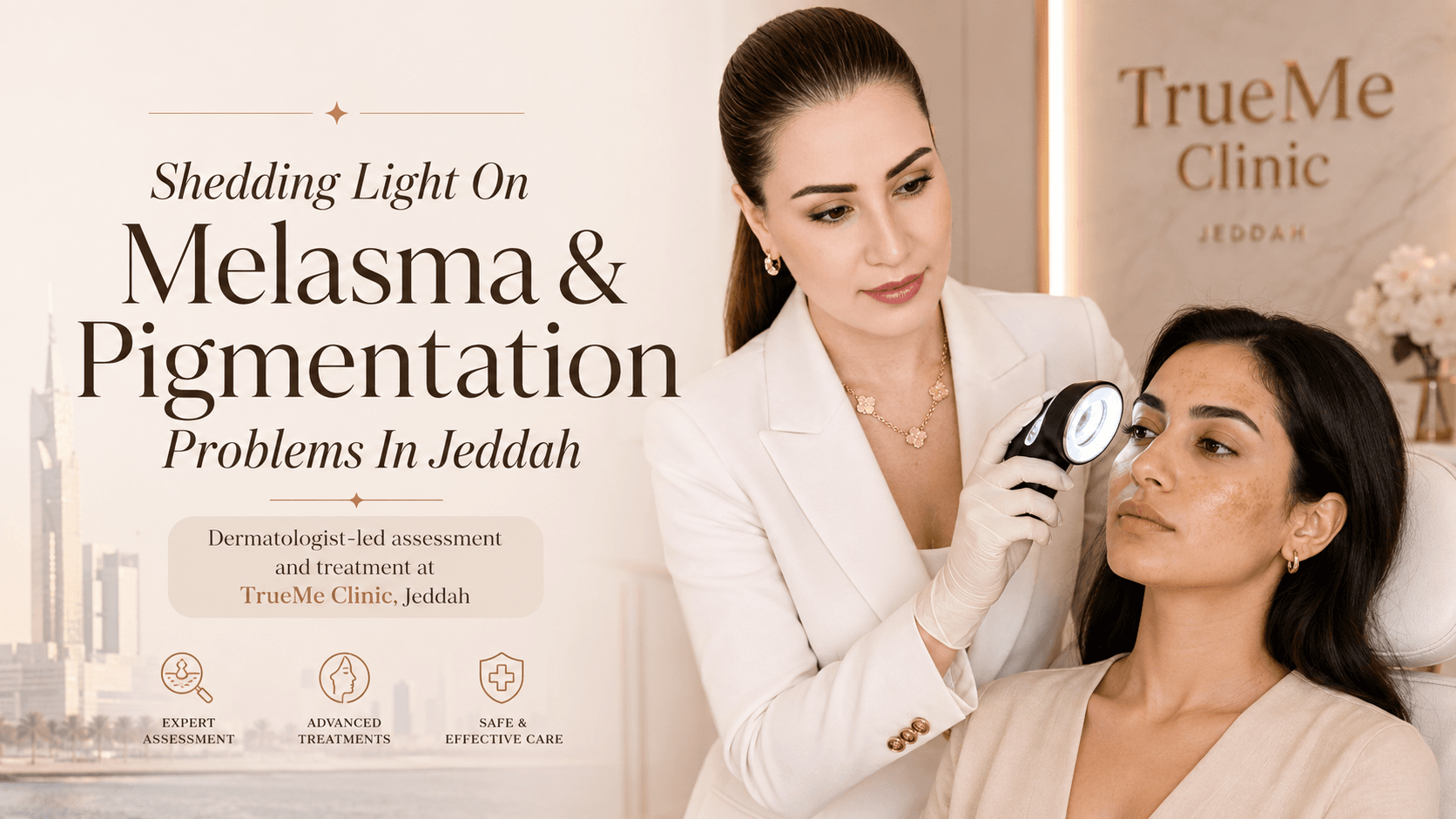
Melasma Treatment in Jeddah: Why Pigmentation Returns and How to Control It Safely
If you are searching for melasma treatment in Jeddah, a pigmentation dermatologist in Jeddah, or the best treatment for melasma in Saudi Arabia, the first step is understanding that not every brown patch is melasma—and not every laser is suitable for darker skin.
Melasma is a chronic facial pigmentation condition that is particularly relevant in Saudi Arabia because of intense ultraviolet exposure, visible light, high temperatures, frequent driving and the prevalence of medium-to-darker skin phototypes. Effective treatment requires an accurate diagnosis, daily photoprotection and a carefully planned combination of medical skincare and, when appropriate, treatments such as chemical peels (Cold Peels), microneedling coupled with Meso-Lightening or conservative pigment lasers.
The objective is not simply to remove visible pigment temporarily. A successful melasma plan aims to control the biological processes that repeatedly stimulate pigment production while minimizing irritation and post-inflammatory hyperpigmentation.
Melasma commonly appears as symmetrical brown or grey-brown patches on the cheeks, forehead, upper lip, nose or jawline. It is influenced by ultraviolet radiation, visible light, hormones, genetic susceptibility, inflammation and changes within the deeper dermal and vascular environment of the skin.
For this reason, melasma is now understood as more than a superficial accumulation of pigment. It is a complex and frequently relapsing condition involving several layers and signalling pathways within the skin.
Is My Pigmentation Melasma, Sun Damage or Post-Acne Pigmentation?
Different types of facial pigmentation can look similar, but they do not always respond to the same treatment.
Melasma
Melasma usually causes irregular but relatively symmetrical brown or grey-brown patches on both sides of the face.
It commonly affects the:
- Cheeks
- Forehead
- Upper lip
- Nose
- Jawline
Melasma may become darker during summer, pregnancy, hormonal treatment or periods of increased sun exposure.
Sunspots and Sun Damage
Sunspots, also called solar lentigines, are usually smaller and more clearly defined than melasma.
They commonly occur on areas that have accumulated years of sun exposure, including:
- Cheeks
- Temples
- Forehead
- Backs of the hands
Unlike melasma, individual sunspots may sometimes respond well to targeted pigment lasers or other lesion-specific treatments. However, a dermatologist should first confirm that the pigmentation is benign and suitable for treatment.
Post-Inflammatory Hyperpigmentation
Post-inflammatory hyperpigmentation, also known as PIH, appears after inflammation, irritation or injury to the skin.
Common triggers include:
- Acne
- Picking or squeezing spots
- Eczema
- Waxing or threading
- Burns
- Aggressive chemical peels
- Laser treatments
- Excessively deep microneedling
- Irritating skincare products
PIH is especially common and may be more persistent in medium and darker skin tones.
Some patients have more than one pigmentation condition. For example, a patient may have melasma across the cheeks together with post-acne pigmentation along the jawline.
Treating every brown patch as “melasma” without identifying the correct diagnosis can lead to disappointing results or worsening pigmentation.
A dermatology assessment may include:
- Clinical examination
- Dermoscopy
- Wood’s lamp examination
- Review of previous treatments
- Assessment of hormonal and environmental triggers
- Evaluation of the pattern and distribution of pigmentation
Why Does Melasma Keep Coming Back?
Melasma returns because most treatments reduce existing pigment without permanently removing the skin’s tendency to produce it.
Melanocytes are the cells responsible for producing melanin. In melasma-prone skin, these cells remain unusually responsive to ultraviolet radiation, visible light, hormones, heat, inflammation and oxidative stress.
Even when a cream, peel or laser visibly improves melasma, the melanocytes can become active again when the triggers return.
Melasma may relapse because of:
- Inconsistent sunscreen use
- Inadequate UVA protection
- Lack of visible-light protection
- Sun exposure while driving
- Daylight exposure through windows
- Hormonal fluctuations
- Pregnancy
- Hormonal medication
- Skin irritation
- Aggressive laser or peel treatments
- Stopping maintenance treatment too early
- Repeated heat or infrared exposure
- Failure to treat inflammation and skin-barrier damage
Recurrence does not necessarily mean that the original treatment failed. It usually means that melasma requires long-term control and maintenance.
Melasma should therefore be approached as a chronic, relapsing pigmentation condition, rather than a stain that can be permanently erased in one treatment session.
Can Heat Make Melasma Worse?
Many patients in Jeddah notice that their melasma becomes more visible during the hottest months or after repeated exposure to intense heat.
Ultraviolet and visible light are better-established triggers than heat alone. However, heat and infrared radiation may contribute to:
- Inflammation
- Oxidative stress
- Increased vascular signalling
- Facial flushing
- Activation of pigment-producing pathways
Practical precautions may include:
- Avoiding prolonged exposure to intense outdoor heat
- Reducing direct exposure to very hot ovens
- Avoiding steam rooms and saunas when they clearly trigger pigmentation
- Cooling the skin after unavoidable heat exposure
- Avoiding aggressive procedures that create prolonged inflammation
- Supporting the skin barrier with gentle moisturizers
Air conditioning itself does not cause melasma. However, dry indoor environments may weaken the skin barrier and make prescription pigment treatments more irritating.
Using a suitable moisturizer can improve treatment tolerance and reduce inflammation-related pigmentation.
Do Indoor Light and Visible Light Affect Melasma?
Visible light can contribute to persistent pigmentation, particularly in medium and darker skin phototypes.
Visible light from the sun is therefore an important consideration in melasma treatment.
Ordinary windows block much of the UVB radiation responsible for sunburn, but they may still allow meaningful amounts of UVA and visible light to pass through.
Patients who spend long periods:
- Driving
- Sitting beside large windows
- Working in bright daylight
- Living in rooms with extensive glass exposure
may continue to receive pigmentation-triggering exposure.
Do Phone and Computer Screens Cause Melasma?
There is growing evidence that Blue light emitted by phones, tablets and electronic screens can penetrate the skin, activate melanocytes, and induce pigmentation.
The Evidence: How Blue Light Affects Skin
- Opsin Activation: Skin cells, particularly melanocytes, contain light sensors called Opsin-3 (OPN3) that directly detect visible blue light.
- TRPV1 & Calcium Influx: Blue light activation stimulates the TRPV1 pathway and allows calcium ions into the cells, triggering melanogenesis (the production of melanin).
- Oxidative Stress: Exposure to blue light increases reactive oxygen species (ROS) and free radicals, causing low-grade inflammation that further activates pigment-producing cells.
Though sunlight remains the "Primary Culprit", as sun emits approximately 100 times more blue light than standard electronic screens. Hence for most patients, the more important priorities are:
- Outdoor ultraviolet exposure
- Visible light from sunlight
- Daylight through windows
- Prolonged driving exposure
- Inadequate sunscreen application
I usually advice to use a moisturizer with SPF when indoors and close to electronic screens and large windows.
Is Tinted Sunscreen Better for Melasma?
For many patients with melasma, tinted sunscreen is preferable to a completely transparent sunscreen.
A broad-spectrum sunscreen protects against UVA and UVB radiation. However, an untinted sunscreen may provide limited protection against visible light.
Tinted sunscreens often contain pigments such as iron oxides, which can provide additional visible-light protection.
This is particularly relevant for patients with:
- Melasma
- Medium or darker skin tones
- Post-inflammatory hyperpigmentation
- Pigmentation that worsens while driving
- Recurrent pigmentation despite regular sunscreen use
When choosing a sunscreen for melasma, look for:
- Broad-spectrum UVA and UVB protection
- SPF 50 or similarly high protection
- A tint that matches your skin tone
- Iron oxides or mineral pigments
- A texture that can be applied generously
- A formula that does not irritate your skin
The best sunscreen is not necessarily the most expensive product. It is the sunscreen that you can apply in the correct quantity and reapply consistently.
For melasma in Jeddah, sunscreen should generally be applied every morning, including on days spent mainly indoors—especially when sitting near windows or driving.
Reapplication is particularly important after:
- Sweating
- Wiping the face
- Outdoor exposure
- Exercise
- Prolonged driving
- Swimming
A wide-brimmed hat, shade and sensible avoidance of peak sunlight can provide additional protection.
Sunscreen should not be viewed as permission to remain in intense sunlight indefinitely.
Can Lasers Make Melasma Worse?
Some lasers can improve carefully selected cases, but some type of lasers can also worsen melasma when the diagnosis, device, settings or patient selection are inappropriate.
Melasma-prone skin is highly reactive. Excessive heat and inflammation may stimulate melanocytes and cause:
- Post-inflammatory hyperpigmentation
- Rebound darkening
- Patchy pigmentation
- Uneven skin tone
- Hypopigmentation
- Rapid recurrence after initial improvement
These risks are particularly relevant in medium and darker skin tones.
This does not mean that every laser is unsafe. It means that laser treatment should not be the automatic first treatment for every patient with melasma.
Before recommending a laser, a dermatologist should consider:
- The exact diagnosis
- Skin photo-type
- Whether the melasma is active or stable
- Previous reactions to lasers or peels
- Current sun exposure
- Hormonal triggers
- Existing skin irritation
- Treatment adherence
- The laser wavelength
- Pulse duration
- Energy settings
- Number and frequency of sessions
- Pre-treatment skincare
- Post-treatment pigment control
Low-fluence Q-switched Nd:YAG and selected picosecond laser techniques may improve resistant melasma in some patients.
However, aggressive laser toning, excessive treatment frequency or high cumulative energy can cause rebound pigmentation and mottled hypopigmentation.
A Pico laser is not automatically the best laser for melasma, and the word “Pico” does not guarantee safety.
The device and settings must be matched to the patient’s skin type, pigment pattern and treatment goals.
Are Hydroquinone and Triple-Combination Creams Safe?
Hydroquinone remains one of the most studied and effective topical treatments for melasma.
Triple-combination creams commonly contain:
- Hydroquinone
- A retinoid such as tretinoin
- A mild topical corticosteroid
Hydroquinone and triple-combination therapy can be effective when prescribed appropriately and monitored by a dermatologist.
Possible side effects include:
- Irritation
- Redness
- Dryness
- Burning
- Increased sensitivity
- Acne-like eruptions
- Inflammation-related pigmentation
- Steroid-related skin changes if misused
- Rare exogenous ochronosis after inappropriate prolonged use
Hydroquinone is not automatically dangerous when used correctly.
Problems are more likely when patients:
- Use unregulated bleaching mixtures
- Apply very high concentrations
- Continue treatment indefinitely
- Use steroid-containing combinations without supervision
- Apply treatment to irritated or damaged skin
- Combine several strong products at the same time
A dermatologist may prescribe hydroquinone in treatment cycles, adjust its concentration, reduce the frequency or alternate it with non-hydroquinone maintenance treatments.
Long-term melasma control usually requires more than one cream. It also depends on photoprotection, barrier repair and relapse prevention.
Does Tranexamic Acid Work for Melasma?
Tranexamic acid may help selected patients with melasma.
It may be used as:
- A topical serum or cream
- An oral medication
- Part of a dermatologist-directed procedural treatment
- A treatment combined with microneedling in selected cases
Topical Tranexamic Acid
Topical tranexamic acid may gradually improve pigmentation and generally has fewer systemic concerns than oral treatment.
Its effectiveness can vary according to the formulation, concentration and combination of ingredients.
Oral Tranexamic Acid
Oral tranexamic acid has shown benefit in some patients with resistant melasma. However, its use for melasma is off-label and requires proper medical assessment.
It is not appropriate for every patient.
A dermatologist should review risk factors such as:
- Previous deep-vein thrombosis
- Pulmonary embolism
- Known blood-clotting disorders
- Increased thrombotic risk
- Certain cardiovascular conditions
- Certain cerebrovascular conditions
- Smoking combined with other risk factors
- Hormonal contraceptive medication
- Significant family history of thrombosis
- Pregnancy
- Breastfeeding
- Other medications or medical conditions
Oral tranexamic acid should not be borrowed from another patient or taken solely because it was recommended on social media.
Do Chemical Peels Help Melasma?
Superficial chemical peels may help improve melasma when combined with an appropriate home-treatment plan.
Depending on the patient’s skin type and pigmentation pattern, options may include:
- Glycolic acid peels
- Lactic acid peels
- Salicylic acid-based formulations
- Jessner-type formulations
- Other superficial pigment protocols
Chemical peels do not permanently cure melasma.
They may help by:
- Removing superficial pigment
- Accelerating skin-cell turnover
- Improving skin brightness
- Improving the penetration of selected topical treatments
However, a peel that is too strong can cause excessive inflammation and post-inflammatory hyperpigmentation.
This risk is particularly relevant in darker skin tones.
In skin of colour, the safest peel is not necessarily the strongest peel.
The following factors all influence safety:
- Type of acid
- Concentration
- Number of layers
- Contact time
- Skin preparation
- Treatment interval
- Post-peel skincare
- Sun protection
Does Microneedling Work for Melasma?
Microneedling may help selected patients as part of a combination treatment plan with special Mesotherapy cocktails.
Potential benefits include:
- Supporting dermal remodelling
- Improving the penetration of selected topical treatments
- Addressing some deeper structural changes associated with melasma
- Providing a non-laser option with less direct thermal injury
However, microneedling is not risk-free.
Excessive depth, repeated passes, poor technique or inappropriate post-procedure products may cause:
- Inflammation
- Skin-barrier damage
- Infection
- Post-inflammatory hyperpigmentation
- Worsening melasma
Microneedling should not be treated simply as a method of opening channels and applying any brightening serum.
Products used during medical microneedling must be suitable for controlled transdermal delivery.
Do Pico Lasers Work for Melasma?
Pico-second lasers deliver energy in extremely short pulses and may target pigment through a photoacoustic effect.
Depending on the device, wavelength and settings, a Pico laser may produce less bulk thermal injury than some older laser techniques.
Picosecond lasers may help selected cases of:
- Resistant melasma
- Uneven facial pigmentation
- Coexisting sunspots
- Epidermal pigment
- Mixed pigmentation
- Pigmentation associated with textural changes
However, Pico laser treatment is not a guaranteed cure.
Melasma can return after an excellent initial response because the underlying tendency to produce pigment remains.
Laser treatment should usually be combined with:
- Tinted sunscreen
- Medical depigmenting creams
- Careful control of inflammation
- Maintenance treatment
- Avoidance of unnecessary heat and sunlight
The safest outcome often comes from conservative settings and a multimodal treatment plan, rather than attempting to remove all pigment in one aggressive session.
Can Melasma Be Cured Permanently?
Melasma is better described as controllable rather than permanently curable.
Many patients can achieve significant clearing and maintain a more even complexion for long periods.
However, the tendency may remain, particularly when melasma is associated with:
- Genetic susceptibility
- Hormonal triggers
- Pregnancy
- Strong ultraviolet exposure
- Visible-light exposure
- Recurrent inflammation
- Heat
- Inconsistent maintenance treatment
A realistic melasma treatment plan usually has three stages.
1. Control Active Pigment
This may involve dermatologist-selected treatments.
2. Treat Resistant Components
Selected patients may benefit from:
- Superficial chemical peels
- Microneedling
- Conservative pigment laser treatment
- Picosecond laser treatment
- Low-fluence Nd:YAG treatment
- Other treatments directed at vascular or dermal components
3. Prevent Relapse
Maintenance is often the most important stage.
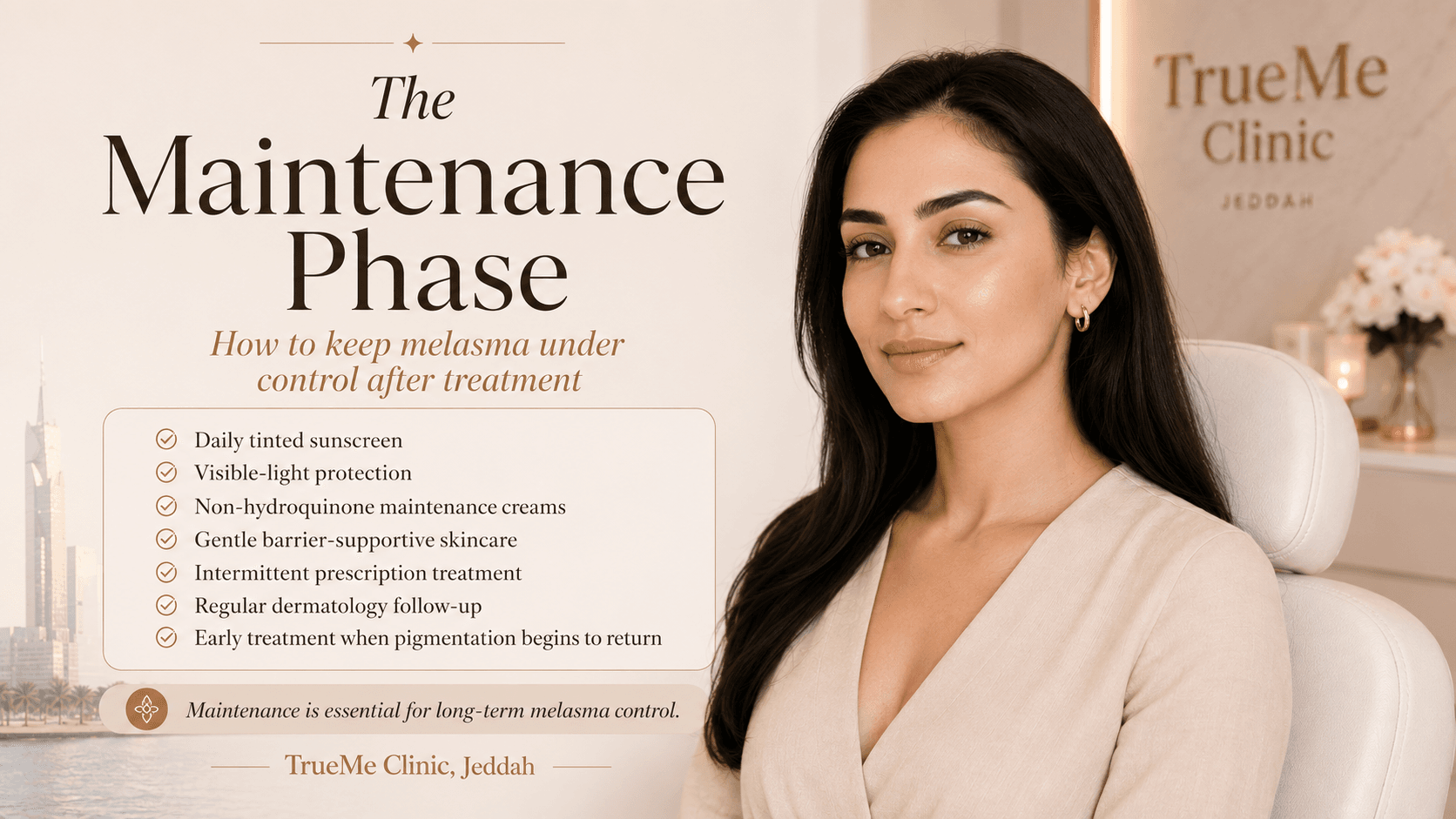
It may include:
- Daily tinted sunscreen
- Visible-light protection
- Non-hydroquinone maintenance creams
- Gentle barrier-supportive skincare
- Intermittent prescription treatment
- Regular dermatology follow-up
- Early treatment when pigmentation begins to return
Patients who stop all treatment immediately after clearing are more likely to experience an obvious relapse.
How Should Melasma Be Managed During Pregnancy?
Melasma commonly begins or worsens during pregnancy because of hormonal changes. It is sometimes called the mask of pregnancy.
During pregnancy, treatment should be conservative and focused mainly on prevention.
Photoprotection During Pregnancy
Use:
- Broad-spectrum sunscreen
- Preferably a tinted sunscreen with visible-light protection
- A wide-brimmed hat
- Shade
- Regular sunscreen reapplication
- Sensible avoidance of intense midday sunlight
Treatments That May Be Considered
Azelaic acid is commonly considered one of the preferred topical options during pregnancy when treatment is required. Topical tranexamic acid serum absorption into the bloodstream is minimal, which makes it a popular choice for treating pregnancy-related melasma or dark spots.
Other gentle ingredients may be suitable during pregnancy:
- Azelaic Acid: Slows down hyperactive pigment cells and calms inflammation; generally considered safe in concentrations up to 20%.
- Vitamin C (L-Ascorbic Acid): Acts as a strong antioxidant that brightens dark spots and blocks melanin synthesis with minimal skin absorption.
- Niacinamide (Vitamin B3): Regulates pigment transfer to the upper skin layers and supports a healthy skin barrier.
- Glycolic Acid: Low-strength gentle chemical exfoliants (under 10%) can safely remove dead, discolored surface skin cells.
Every product, including over-the-counter brightening products, should be discussed with the treating dermatologist and obstetrician.
Treatments Generally Avoided During Pregnancy
Pregnant patients are generally advised to avoid:
- Hydroquinone
- Topical retinoids such as tretinoin
- Oral tranexamic acid for cosmetic treatment
- Aggressive chemical peels
- Elective pigment lasers unless medically justified
- Unregulated whitening products
Because pregnancy-related melasma may improve after delivery, aggressive treatment during pregnancy is rarely appropriate.
What Actually Helps Melasma in Saudi Arabia?
The safest and most effective approach is usually a personalized combination rather than one miracle cream, peel or laser.
Daily Prevention
A practical prevention plan may include:
- Broad-spectrum tinted SPF 50 sunscreen
- Adequate sunscreen quantity
- Regular reapplication
- Hats and shade
- Window protection when appropriate
- Gentle cleansing
- Barrier-supportive moisturization
- Avoidance of unnecessary irritation
Prescription Pigment Control
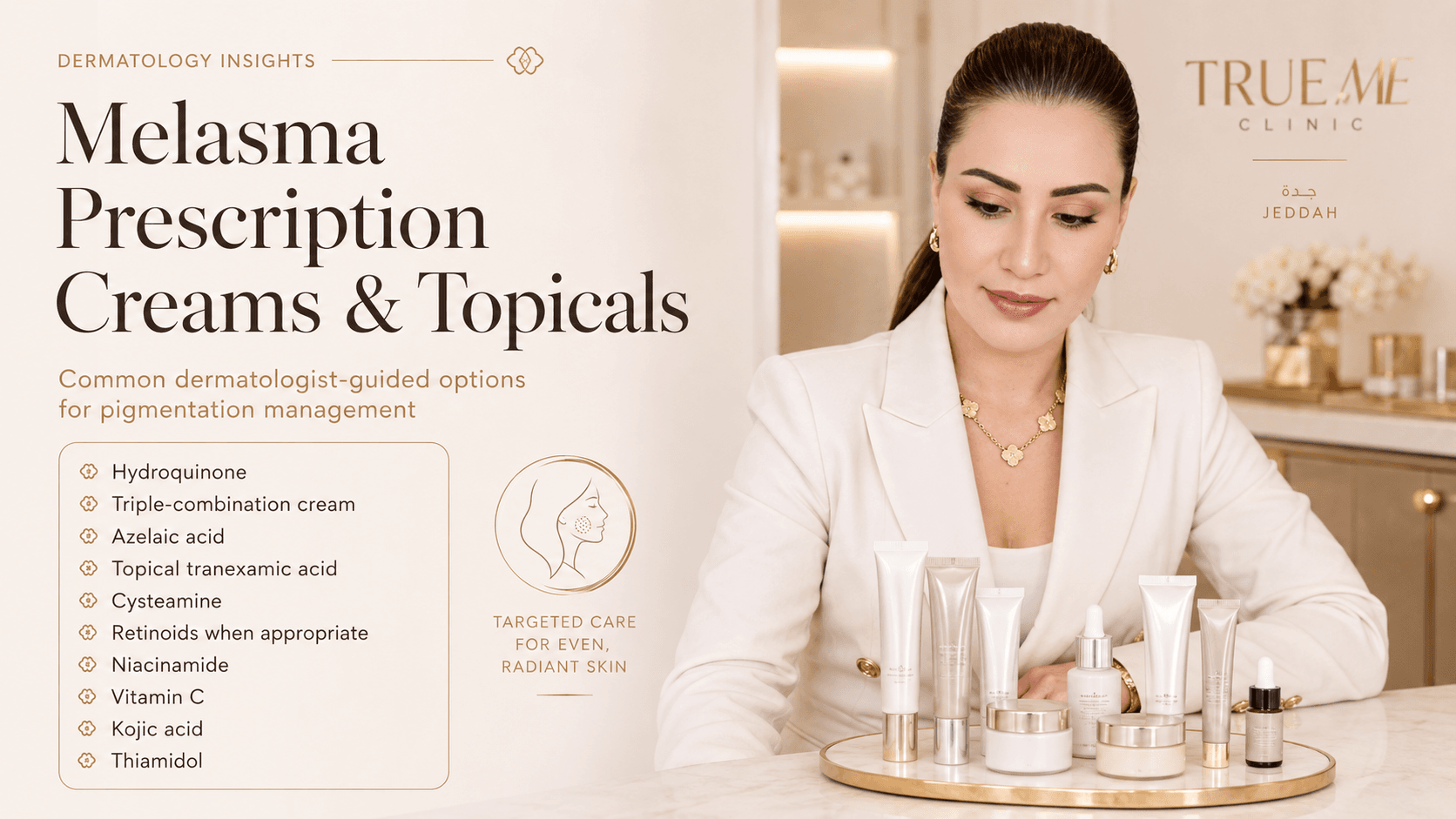
Depending on the individual patient, treatment may include:
- Hydroquinone
- Triple-combination cream
- Azelaic acid
- Topical tranexamic acid
- Cysteamine
- Retinoids when appropriate
- Niacinamide
- Vitamin C
- Kojic acid
- Thimidol
- Other dermatologist-selected ingredients
Carefully Selected Procedures
Procedures may include:
- Superficial chemical peels
- Medical microneedling with special cocktail Mesotherapy
- Conservative pigment laser treatment
- Picosecond laser treatment in selected cases
- Low-fluence Nd:YAG treatment
- Treatment of relevant vascular or dermal components
Long-Term Maintenance
Maintenance may include:
- Continued visible-light protection
- Non-hydroquinone maintenance treatment
- Intermittent prescription cycles
- Gentle skincare
- Regular dermatology review
- Early treatment of relapse
When Should You See a Dermatologist?
Arrange a dermatology assessment if:
- You are unsure whether the pigmentation is melasma
- The pigmentation is changing rapidly
- One patch looks different from the others
- A mark is raised, crusting or bleeding
- The borders are irregular
- Over-the-counter creams have caused irritation
- Pigmentation worsened after a laser or peel
- You are pregnant or breastfeeding
- You are considering oral tranexamic acid
- Previous treatments have repeatedly failed
- Your pigmentation is asymmetrical or unusual
Not every brown facial patch is cosmetic.
A dermatologist should assess unusual, changing or asymmetrical pigmentation before bleaching creams, peels or lasers are used.
Frequently Asked Questions About Melasma
Is My Pigmentation Melasma, Sun Damage or Post-Acne Pigmentation?
Melasma usually appears as symmetrical brown or grey-brown patches on the face. Sunspots are often smaller and more clearly defined, while post-inflammatory pigmentation develops after acne, irritation or injury. Because these conditions can overlap, a dermatologist should confirm the diagnosis before treatment.
Why Does Melasma Return After Treatment?
Melasma returns after treatment because it is a chronic, recurring skin condition driven by underlying triggers like ultraviolet light, heat, and hormones, rather than a simple surface flaw that can be permanently erased. Pigmentation patches return because treatment reduces existing pigment but does not permanently remove the skin’s susceptibility to ultraviolet light, visible light, hormones, inflammation and other triggers. Daily photoprotection and maintenance treatment are therefore important after improvement.
Can Heat Make Melasma Worse?
Ultraviolet and visible light are better-established triggers, but intense heat and infrared exposure may contribute to inflammation, vascular activity and pigment production in susceptible patients.
Do Indoor Light and Visible Light Affect Melasma?
Visible light from sunlight can aggravate melasma, particularly in medium and darker skin tones. Daylight entering through windows also affects melanocyte activity.
Is Tinted Sunscreen Better for Melasma?
Tinted sunscreen is often preferable because iron oxides can provide additional protection against visible light. Patients with melasma should generally use high-protection broad-spectrum sunscreen and reapply it during continued exposure.
Can Lasers Make Melasma Worse?
Yes. Excessive laser energy, heat or inflammation may cause rebound pigmentation or post-inflammatory hyperpigmentation, especially in darker skin. Lasers should be used conservatively and only after proper assessment under a specialist dermatologist.
Are Hydroquinone and Triple-Combination Creams Safe?
Hydroquinone and triple-combination creams can be effective and safe when prescribed for an appropriate duration and monitored by a dermatologist. Prolonged, unsupervised use may cause irritation and other complications.
Does Tranexamic Acid Work for Melasma?
Tranexamic acid may improve melasma in selected patients. Oral treatment requires medical assessment because it may not be suitable for patients with blood-clotting risks or certain medical conditions.
Do Chemical Peels Help Melasma?
Superficial chemical peels may improve melasma when used as part of a broader treatment plan. Aggressive peels can worsen pigmentation, particularly in darker skin tones.
Does Microneedling Work for Melasma?
Microneedling may help selected patients by supporting dermal remodelling and improving the delivery of suitable topical treatments. Excessive or poorly performed microneedling may cause inflammation and pigmentation.
Do Pico Lasers Work for Melasma?
Pico lasers may improve selected resistant cases, but they are not a permanent cure. Conservative settings, appropriate patient selection and maintenance treatment remain essential.
Can Melasma Be Cured Permanently?
Melasma is generally controllable rather than permanently curable. Significant improvement is possible, but long-term sunscreen and maintenance treatment are often necessary.
How Should Melasma Be Managed During Pregnancy?
Treatment during pregnancy should focus on tinted sunscreen, shade and gentle skincare. Azelaic acid may be considered under medical guidance, while hydroquinone, retinoids, oral tranexamic acid and aggressive procedures are generally avoided.
The Most Important Message
Melasma should not be treated as a stain that simply needs to be burned, peeled or scrubbed away.
It is a biologically active, chronic pigmentary condition.
Successful treatment depends on:
- Correct diagnosis
- Consistent photoprotection
- Visible-light protection
- Carefully selected medical treatment
- Gentle procedural treatment when appropriate
- Long-term maintenance
- Early management of recurrence
For patients seeking melasma treatment in Jeddah, particularly those with medium, darker or melanin-rich skin, the safest approach is to consult a dermatologist experienced in treating skin of colour and facial pigmentation.
The goal should not be the fastest possible removal of pigment.
The goal should be clearer, healthier and more stable skin—without creating additional inflammation or post-treatment pigmentation.
Clinical References and Further Reading
This article was medically written and reviewed using peer-reviewed dermatology literature and established clinical guidance.
Medical Review
Written and medically reviewed by Dr. Shazia Ali UK-trained Dermatologist and Aesthetic Physician TrueMe Medical Center, Jeddah, Saudi Arabia
Last medically reviewed: July 2026
Medical Disclaimer
This article is intended for general patient education and does not replace an individual medical consultation.
Melasma treatments—including prescription creams, oral tranexamic acid, chemical peels, microneedling and lasers—should be selected according to the diagnosis, medical history, pregnancy status and skin phototype.
Book a Pigmentation Consultation in Jeddah
If you have recurring melasma, facial pigmentation or dark marks that have not improved with over-the-counter products, a dermatology consultation can help identify the type of pigmentation and the safest treatment plan for your skin.
[Book a consultation with Dr. Shazia Ali in Jeddah] https://drshaziaali.com/en/book-appointment