
Why Is My Hair Falling Out? Female Hair Loss in Saudi Arabia: Causes, Exosomes & Regenerative Solutions
August 1, 2026
Why Is My Hair Falling Out? Female Hair Loss in Saudi Arabia: Causes, Exosomes & Regenerative Solutions
Why Is My Hair Falling Out—and When Should I Be Concerned?
It is completely normal to lose between 50 and 150 hairs per day. Because the average scalp contains more than 100,000 hair follicles, this daily shedding is a natural part of the hair-growth cycle and should not cause a noticeable change in your overall hair volume. However, sudden excessive shedding, a widening part, a thinner ponytail, bald patches or recession around the hairline should not be ignored.
Female hair loss may be caused by telogen effluvium, iron deficiency, thyroid disease, vitamin D deficiency, rapid weight loss, polycystic ovary syndrome (PCOS), female-pattern hair loss, autoimmune disease or repeated tension from tight hairstyles. The most effective treatment depends on identifying the correct cause—not simply taking hair vitamins or starting procedures without a diagnosis.
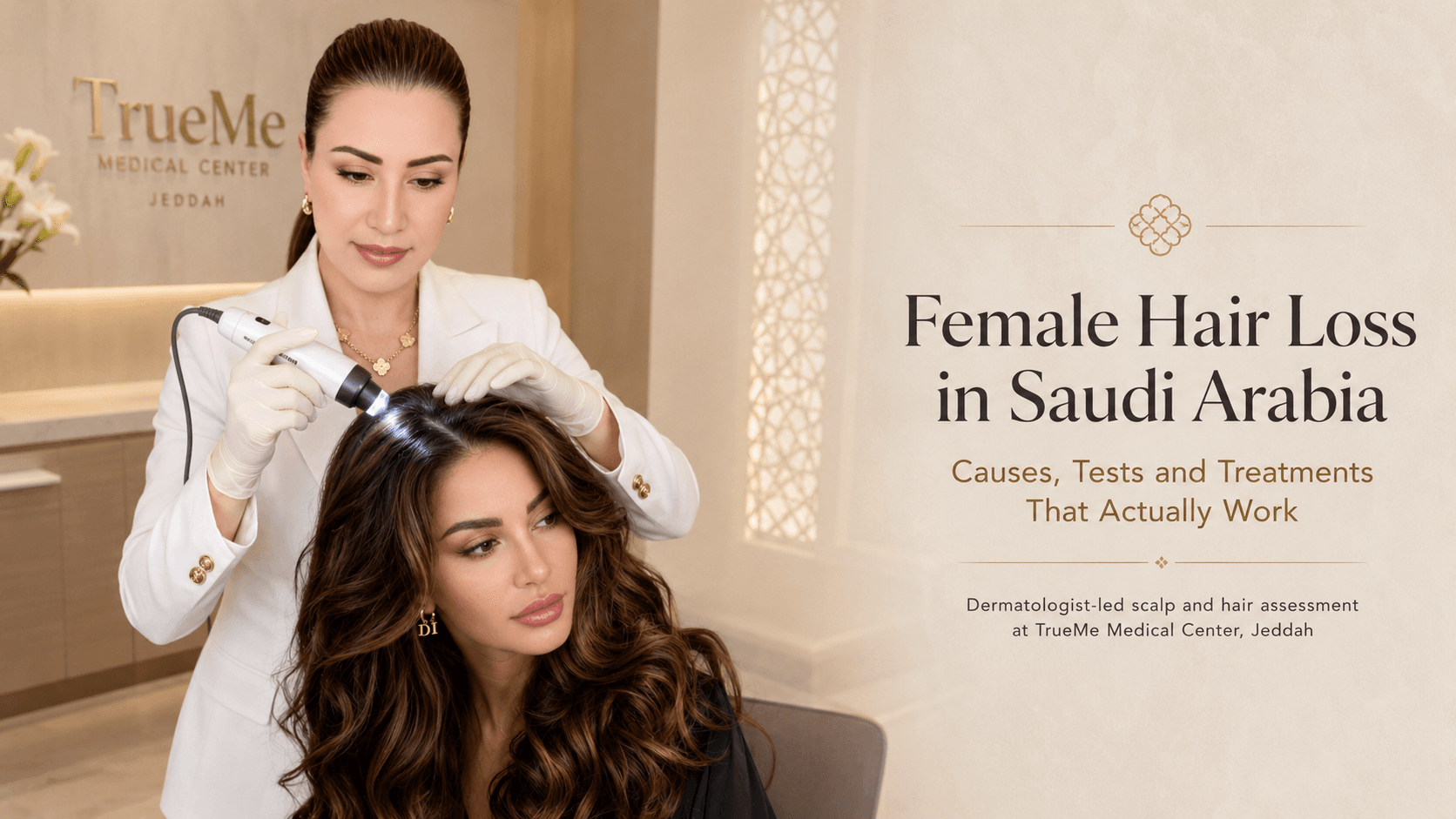
As a dermatologist in Jeddah, I frequently meet women who say, “My blood tests are normal, but my hair is still falling out.” Often, the missing step is a detailed scalp examination and trichoscopy to determine whether the problem is excessive shedding, hair-shaft breakage, progressive follicle miniaturization or an inflammatory form of hair loss.
Is This Normal Hair Shedding or True Hair Loss?
Losing some hair every day is part of the normal hair-growth cycle. The exact number varies, and counting individual hairs is rarely useful. What matters more is whether there has been a clear change from your usual pattern.
Signs that your shedding may require assessment include:
- Much more hair than usual in the shower, brush or on your pillow
- A noticeably thinner ponytail
- A widening central part
- Increasing visibility of the scalp under bright light
- Recession or broken hairs around the temples and hairline
- Smooth, round bald patches
- Scalp pain, burning, itching, redness, scaling or pustules
- Loss of eyebrows or eyelashes
- Shedding that continues for longer than three to six months
Hair shedding and progressive hair loss are not always the same. In telogen effluvium, many hairs enter the resting phase together and shed several weeks later. In female-pattern hair loss, follicles gradually become smaller and produce progressively finer hairs. Some women have both conditions at the same time.
Why Am I Suddenly Losing So Much Hair?
Sudden diffuse shedding is commonly caused by telogen effluvium. It usually begins approximately two to three months after a physical, nutritional, hormonal or emotional trigger.
Possible triggers include:
- High fever, infection or major illness
- Surgery or hospitalization
- Childbirth
- Severe emotional stress
- Rapid weight loss or restrictive dieting
- Inadequate protein or calorie intake
- Iron deficiency
- Thyroid disease
- Starting or stopping certain medications
- Hormonal changes, including stopping some contraceptive pills
- Major changes in sleep or general health
This delay often causes confusion. A woman may be feeling well when the shedding starts and may not connect it to an illness, diet or stressful event that occurred months earlier.
Acute telogen effluvium is usually temporary, but recovery is not immediate. Once the trigger has been corrected, shedding may take several months to settle because hair follicles must complete their natural cycle.
Can Low Ferritin Cause Hair Loss?
Ferritin reflects the body’s iron stores. A woman can have low iron stores even before she develops obvious anaemia, particularly if she has heavy menstrual bleeding, recently delivered a baby, follows a restrictive diet or has gastrointestinal problems.
Low ferritin may contribute to diffuse shedding in susceptible women, but ferritin must be interpreted properly. There is no single universally accepted “perfect ferritin level for hair” that applies to every patient.
The result should be considered alongside:
- Complete blood count
- Menstrual and dietary history
- Symptoms of iron deficiency
- Other laboratory findings
- The type of hair loss seen during examination
Taking iron without documented deficiency is not recommended. Excess iron can be harmful, and supplementation will not correct hair loss caused by follicle miniaturization, inflammation or traction.
Can Vitamin D Deficiency Cause Hair Loss?
Vitamin D deficiency is relatively common in Saudi Arabia despite the sunny climate. Limited direct sun exposure, indoor lifestyles, clothing coverage, skin type, diet and other factors may contribute.
Low vitamin D has been associated with several types of hair loss, but an association does not mean that vitamin D is the only cause. Correcting a genuine deficiency is important for general health and may form part of the treatment plan. However, vitamin D alone should not be presented as a guaranteed cure for female-pattern or autoimmune hair loss.
Can Thyroid Disease Cause Hair Loss?
Both an underactive and an overactive thyroid may cause diffuse hair shedding. Thyroid-related hair loss is usually accompanied by other symptoms, although these may be subtle.
Possible symptoms include:
- Unexplained weight change
- Fatigue
- Feeling unusually cold or hot
- Changes in heart rate
- Constipation or altered bowel habits
- Dry skin
- Menstrual changes
- Anxiety, tremor or sleep disturbance
A thyroid-stimulating hormone test may be appropriate when the medical history or clinical examination suggests thyroid dysfunction.
Can Rapid Weight Loss or GLP-1 Treatment Cause Hair Shedding?
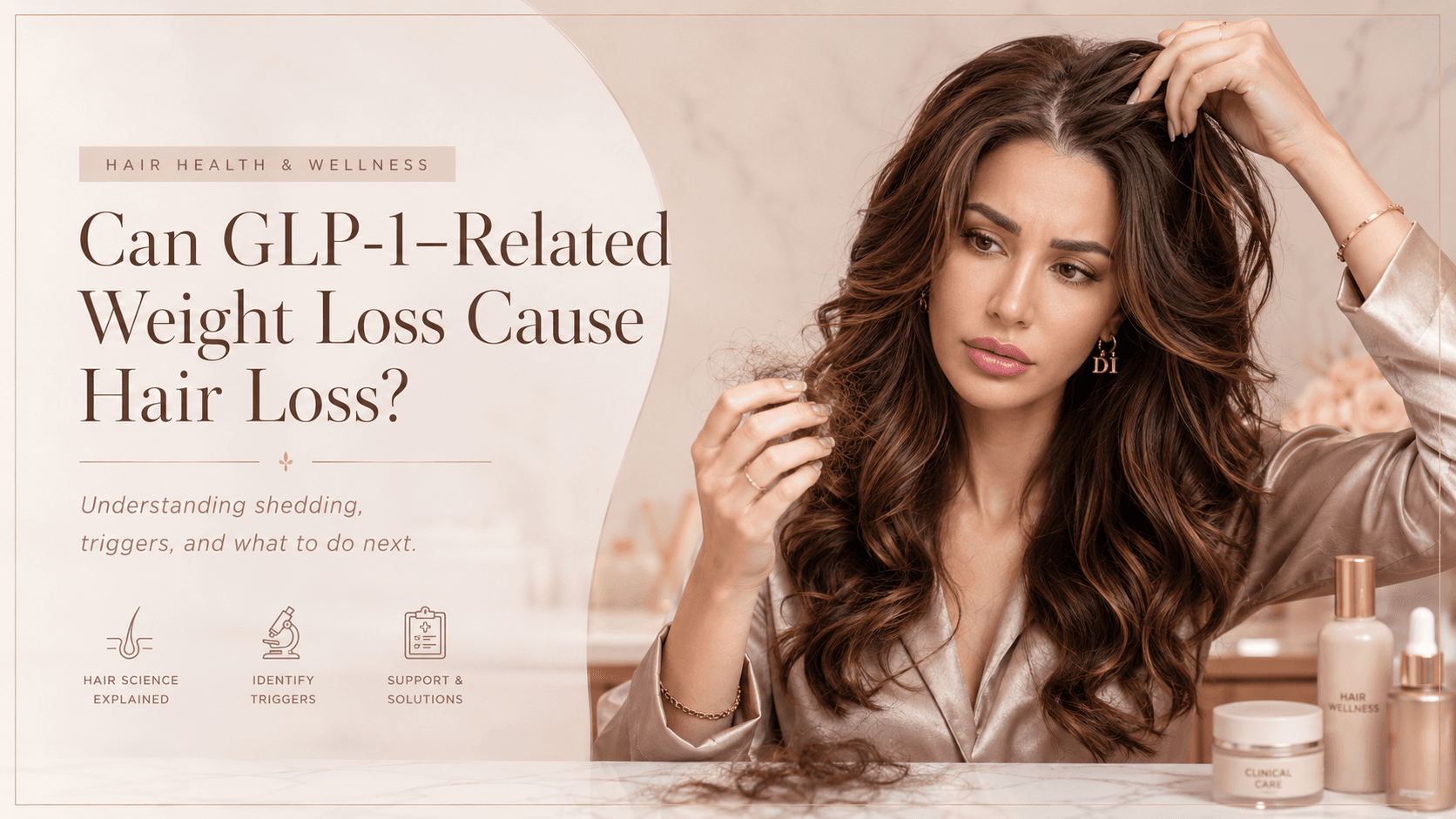
Yes. Rapid weight loss, very-low-calorie diets, bariatric surgery and some weight-loss treatments may be followed by telogen effluvium. This can also occur during significant weight loss associated with GLP-1 medications. The shedding is generally considered more closely related to rapid weight change, reduced nutritional intake or physiological stress than to direct permanent damage to the follicles.
The trigger may involve:
- Sudden calorie reduction
- Insufficient protein intake
- Iron, zinc or other nutritional deficiencies
- The physical stress of rapid weight change
- An underlying illness or medication-related factor
Shedding commonly begins several weeks or months after the weight loss starts. This does not necessarily mean that the follicles have been permanently damaged, but nutritional intake, laboratory findings and the rate of weight loss should be reviewed.
Could My Hair Loss Be Related to PCOS?
Polycystic ovary syndrome can be associated with increased androgen activity. In some women, this contributes to female-pattern hair loss.
Clues that may justify hormonal assessment include:
- Irregular or absent periods
- Increased facial or body hair
- Persistent adult acne
- Difficulty becoming pregnant
- Weight gain or insulin resistance
- Darkening of the skin around the neck or body folds
Not every woman with female-pattern hair loss has PCOS, and not everyone with PCOS develops scalp hair loss. Hormonal tests should therefore be ordered according to the medical history and clinical findings rather than automatically for every patient.
What Does Female-Pattern Hair Loss Look Like?
Female-pattern hair loss is the most common form of progressive hair loss in women. It often causes:
- Widening of the central part
- Reduced density over the crown or top of the scalp
- A smaller or thinner ponytail
- Finer, shorter hairs in affected areas
- Relative preservation of the frontal hairline
Unlike telogen effluvium, female-pattern hair loss usually develops gradually. However, a period of illness, stress or nutritional deficiency can trigger increased shedding and make previously subtle pattern hair loss suddenly more noticeable.
Early diagnosis is valuable because treatment is generally better at preserving and strengthening existing follicles than restoring follicles that have been severely miniaturized for many years.
Which Blood Tests Are Actually Necessary?
There is no single “hair-loss blood panel” that every woman requires. Testing should be selected after taking a medical history and examining the scalp.
Common initial tests may include:
- Complete blood count
- Ferritin and, when appropriate, additional iron studies
- Thyroid-stimulating hormone
- Vitamin D when deficiency is suspected or likely
Depending on the patient’s symptoms, diet and medical history, additional testing may include:
- Vitamin B12 or folate
- Zinc
- Liver or kidney function
- Tests for inflammatory or autoimmune disease
- Hormonal assessment for suspected PCOS or androgen excess
- Other tests related to weight loss, malabsorption or chronic illness
A very large laboratory panel is not automatically better. Conversely, normal blood results do not rule out female-pattern hair loss, traction alopecia, alopecia areata or an inflammatory scalp disorder.
When Is Trichoscopy Required?
Trichoscopy is a non-invasive examination that uses magnification and specialized lighting to assess the scalp, hair shafts and follicular openings. It allows a dermatologist to identify features that cannot be seen clearly with the naked eye.
Trichoscopy can help identify:
- Variation in hair-shaft diameter
- Follicle miniaturization
- Broken hairs
- Empty follicular openings
- Features of alopecia areata
- Signs of inflammation or scarring
- Patterns consistent with traction alopecia
- Changes that can be photographed and monitored over time
It is particularly valuable when telogen effluvium and female-pattern hair loss may be occurring together.
When Is a Scalp Biopsy Needed?
Most women do not need a scalp biopsy. It may be recommended when:
- The diagnosis remains uncertain after examination and trichoscopy
- Scarring alopecia is suspected
- There is unexplained inflammation, redness, scaling, pain or burning
- Hair loss is progressing despite apparently appropriate treatment
- More than one condition may be present
A biopsy removes a very small sample of scalp under local anaesthetic. It can help determine whether follicles are inflamed, miniaturized, scarred or otherwise abnormal.
Early assessment is particularly important when scarring hair loss is suspected because follicles that have been permanently destroyed cannot reliably regrow.
Do Hair Vitamins and Biotin Supplements Work?
Hair supplements may be useful when they correct a genuine deficiency. They are not universal hair-growth treatments.
Biotin deficiency is uncommon in people eating a balanced diet. High-dose biotin has not been proven to treat most cases of female hair loss, and it can interfere with certain laboratory tests.
Excessive intake of some nutrients—including vitamin A, vitamin E and selenium—may worsen hair shedding. Supplements should not be taken blindly because excessive amounts of certain nutrients can contribute to hair loss or cause other health problems.
A more medically appropriate approach is to:
- Diagnose the type of hair loss.
- Identify relevant nutritional deficiencies.
- Correct confirmed deficiencies using an appropriate dose.
- Treat the underlying follicular condition when necessary.
Does Minoxidil Really Regrow Hair?
Minoxidil is one of the most established treatments for female-pattern hair loss. It may help prolong the growth phase, improve hair density and slow progressive follicle miniaturization.
Important points include:
- Results require consistent use.
- Temporary increased shedding can occur after starting treatment.
- Early improvement may be noticed after three to four months.
- A more meaningful assessment usually requires six to twelve months.
- Benefits gradually reduce if treatment is stopped.
- Scalp irritation or unwanted facial hair can occur in some patients.
Low-dose oral minoxidil is sometimes prescribed off-label for selected women. It is not suitable for everyone and requires medical assessment because it can affect blood pressure, heart rate or fluid retention.
Women who are pregnant, planning pregnancy or breastfeeding should avoid minoxidil unless specifically advised otherwise by their treating physician.
Does PRP Work for Female Hair Loss?
Platelet-rich plasma, or PRP, is prepared from the patient’s own blood and injected into the scalp. Platelets release growth factors that may support follicular activity.
Clinical studies and meta-analyses suggest that PRP can improve hair density in some women with pattern hair loss. A 2024 systematic review reported improvements in density and thickness with a generally favourable safety profile.
However:
- PRP protocols are not fully standardized.
- Platelet concentration and preparation methods vary.
- Results differ between patients.
- PRP cannot replace investigation of iron deficiency, thyroid disease or inflammatory hair loss.
- It is usually most useful as part of a combined treatment plan.
A typical course may involve an initial series of sessions followed by maintenance, but the schedule should be individualized according to the diagnosis and response.
Do Exosomes Regrow Hair?
Exosomes are extracellular vesicles involved in communication between cells. Early laboratory and clinical studies suggest potential regenerative effects, but exosome-based hair treatments are much newer than established treatments such as minoxidil or PRP.
At present:
- Exosome products and biological sources vary considerably.
- Preparation, concentration and quality control are not standardized.
- Large, long-term randomized clinical trials remain limited.
- Optimal dosing and treatment intervals are unclear.
- Exosomes should not be presented as a guaranteed replacement for established therapy.
A responsible consultation should explain the product source, available evidence, regulatory status, proposed benefits, uncertainties and alternative treatments. Current reviews describe exosomes as promising, while emphasizing the need for stronger clinical evidence and better product standardization.
Does LED or Low-Level Light Therapy Work?
Low-level light therapy, also known as photobiomodulation, uses specific wavelengths of red or near-infrared light to stimulate follicular activity. It is different from ordinary salon lighting.
Randomized studies suggest that appropriate low-level light devices may improve hair density in some people with pattern hair loss.
Results depend on:
- Correct diagnosis
- Device specifications and wavelength
- Regular and consistent use
- Treatment duration
- Whether it is combined with other evidence-based therapy
LED or low-level light treatment is generally considered an adjunct rather than a cure for every type of hair loss. It will not correct iron deficiency, untreated thyroid disease or active scarring alopecia.
What About Regenera and Other Regenerative Hair Treatments?
Regenerative hair treatments aim to support follicular function using biological signals, cellular components or growth factors. Depending on the selected treatment, this category may include PRP, exosomes, autologous cellular treatments such as Regenera, and photobiomodulation.
These treatments may have a role in selected patients, particularly when active follicles remain present. However, no regenerative procedure can compensate for an incorrect diagnosis.
For example:
- A woman with iron deficiency needs the deficiency identified and treated.
- A patient with thyroid disease requires appropriate medical management.
- Active inflammatory or scarring alopecia requires control of the inflammation.
- Female-pattern hair loss usually requires a long-term medical strategy.
- Traction alopecia requires removal of the repeated pulling force.
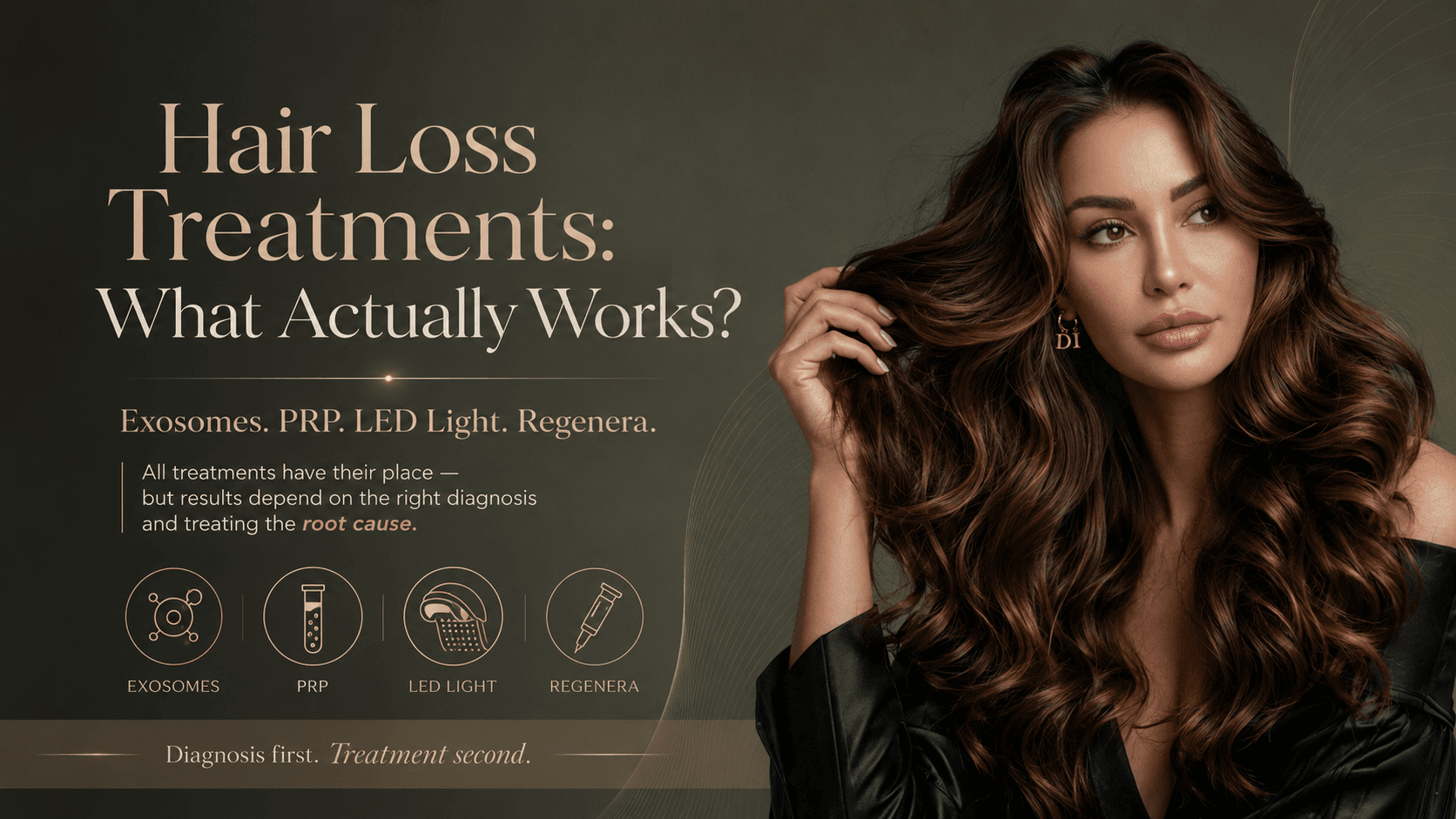
PRP, exosomes, LED therapy and Regenera may all have a place in hair-loss management—but they are most likely to help when the diagnosis is correct and the underlying cause is addressed.
How Long Does Female Hair-Loss Treatment Take?
Hair grows slowly, so genuine treatment requires patience.
A realistic timeline may be:
- First 1–3 months: Investigation, correction of triggers and possible continued shedding
- Around 3–4 months: Early reduction in shedding or initial regrowth in responsive patients
- Around 6 months: More reliable assessment of treatment response
- Between 6–12 months: Visible improvement in density or hair calibre
- Long term: Maintenance may be required for female-pattern hair loss
Telogen effluvium can settle once its trigger resolves, but visible density takes longer to return. Female-pattern hair loss is generally a long-term condition that requires ongoing management.
Standardized photographs and trichoscopic measurements are more reliable than checking the mirror every day.
Can Wearing Hijab Cause Hair Loss?
Wearing hijab does not directly damage hair follicles or automatically cause hair loss.
The issue is usually how the hair is secured underneath it. Risk may increase when the hair is repeatedly pulled into a tight bun or ponytail, especially when it is secured in the same position every day. Tight undercaps, clips or pins may add pressure and friction around the temples and hairline.
Helpful habits include:
- Avoiding very tight ponytails and buns
- Changing the position of the bun regularly
- Using gentle hair ties instead of tight elastic bands
- Avoiding repeated pulling around the temples
- Allowing wet hair to dry before tying or covering it for prolonged periods
- Washing the scalp according to its individual needs
- Seeking assessment for persistent itching, scaling or hairline recession
A hijab should not be blamed for diffuse shedding caused by iron deficiency, thyroid disease, rapid weight loss or female-pattern hair loss.
Can Tight Hairstyles Cause Permanent Hair Loss?
Yes. Repeated pulling can cause traction alopecia, particularly around the frontal and temporal hairline.
Early traction alopecia may be reversible when the tension is removed. Warning signs include:
- Pain or tightness after styling
- Small bumps around the hairline
- Broken hairs
- Thinning around the temples
- A receding or irregular hairline
If traction continues for years, chronic inflammation and scarring can permanently destroy follicles. Changing the hairstyle early is therefore important.
When Should I See a Dermatologist for Hair Loss?
Arrange a dermatology assessment if you notice:
- Rapid or persistent shedding
- A widening part or thinning crown
- Bald patches
- Recession around the hairline
- Scalp pain, burning, redness or scaling
- Loss of eyebrows or eyelashes
- Hair loss accompanied by irregular periods, acne or increased facial hair
- Shedding after rapid weight loss
- No improvement despite taking supplements
- A family history of progressive female hair loss
The purpose of the consultation is not simply to recommend a procedure. It is to determine why the hair is falling, whether the follicles are still healthy and which combination of medical, nutritional and regenerative treatments is appropriate.
The Most Important Message
Female hair loss is a symptom—not a single diagnosis. Low ferritin, vitamin D deficiency, thyroid disease, rapid weight loss and PCOS may contribute, but normal blood tests do not exclude female-pattern hair loss or other scalp conditions.
The most effective plan begins with a medical history, scalp and hair examination and, when appropriate, trichoscopy and targeted blood tests. Minoxidil has the strongest established evidence for female-pattern hair loss. PRP and low-level light therapy may provide additional benefits in selected patients, while exosome treatments should be discussed with appropriate caution because clinical evidence and product standardization are still evolving.
Early diagnosis offers the best opportunity to protect existing follicles and prevent avoidable permanent hair loss.
Dr. Shazia Ali is a UK-trained dermatologist and aesthetic physician at TrueMe Medical Center in Jeddah, Saudi Arabia.
This article provides general educational information and does not replace an individual medical consultation, diagnosis or treatment plan.