
Skin Boosters vs Fillers vs Biostimulators: Radiesse, Sculptra, PDRN & Exosomes Explained
September 1, 2026
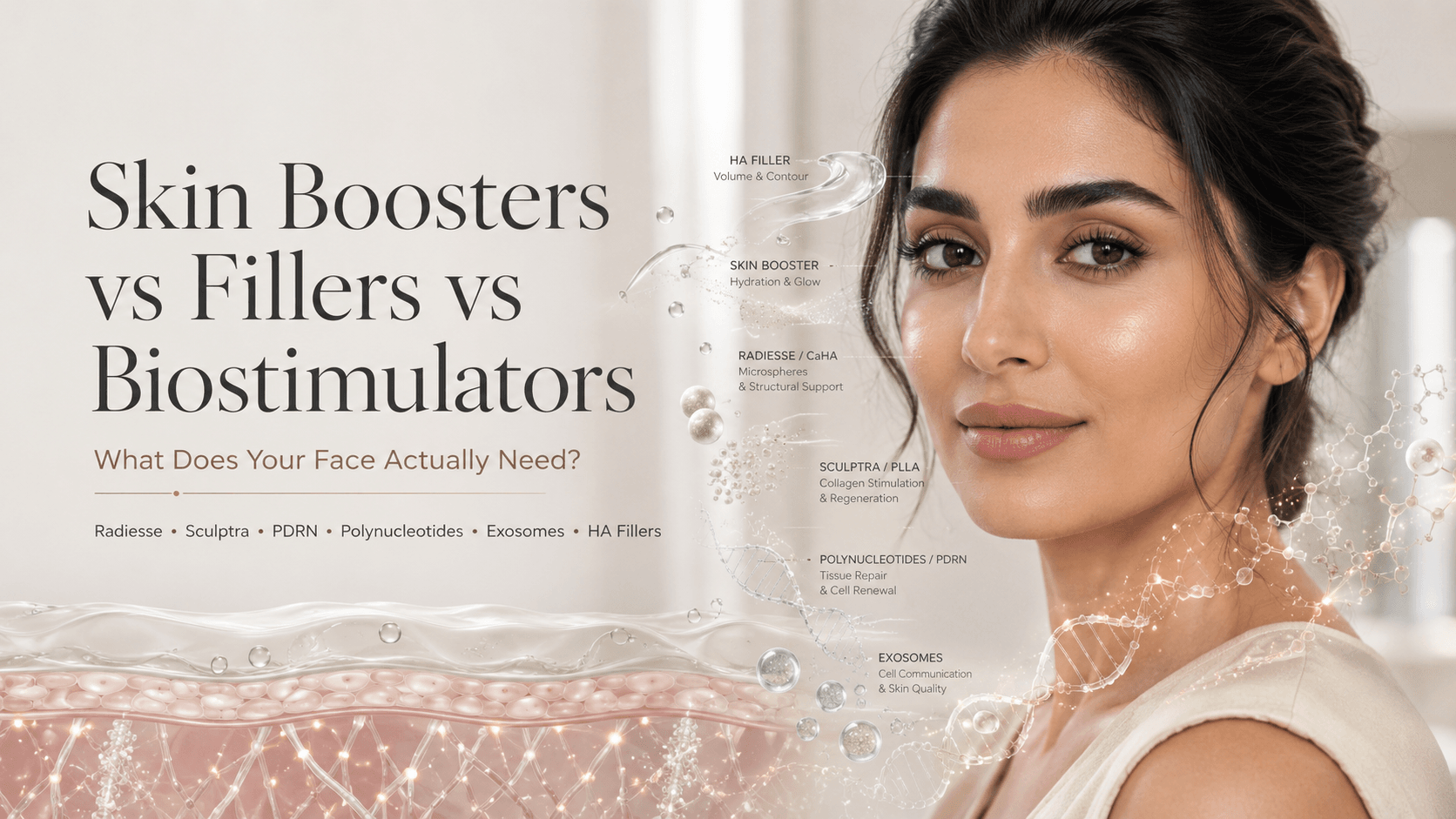
Skin Boosters vs Fillers vs Biostimulators: What Does Your Face Actually Need?
If you are considering skin boosters in Jeddah, dermal fillers, Radiesse, Sculptra, PDRN, polynucleotides or exosomes, the terminology can become confusing very quickly. These treatments are often grouped together under phrases such as “regenerative aesthetics” or “injectable rejuvenation,” but they do not do the same job.
A traditional hyaluronic acid filler primarily replaces or reshapes volume. A skin booster is generally intended to improve hydration and skin quality rather than significantly change facial contours. Biostimulators such as calcium hydroxylapatite (CaHA) and poly-L-lactic acid (PLLA) stimulate tissue remodeling and collagen formation over time. Polynucleotides and PDRN occupy another regenerative category, while exosome-based treatments remain an evolving field in which clinical evidence and regulation require careful interpretation.
The most important question is therefore not, “Which injectable is best?” It is:
What is actually wrong with the tissue, and what biological or structural problem are we trying to correct?
Filler, Skin Booster or Biostimulator: The Short Answer
The simplest way to understand modern injectable treatments is by asking what you want the treatment to accomplish.
| Main concern | Treatment category commonly considered | What it primarily does |
|---|---|---|
| Dehydrated, crepey or dull skin | HA skin booster | Improves hydration and selected skin-quality parameters |
| Fine texture and early skin-quality change | Skin booster / PN-based treatment | Targets skin quality rather than major volume |
| True volume loss | HA dermal filler | Restores volume and supports facial structure |
| Chin, cheek, lip or jawline contour | HA dermal filler | Changes shape, projection or proportion |
| Skin laxity and reduced dermal firmness | CaHA or another collagen biostimulator | Stimulates tissue remodeling and collagen production |
| Gradual global collagen restoration | PLLA | Produces progressive collagen-mediated tissue restoration |
| Hydration plus structural support/biostimulation | HA-CaHA hybrid products | Combines an immediate HA effect with CaHA-mediated remodeling |
| Regenerative skin-quality treatment | Polynucleotides/PDRN | Emerging evidence for texture, elasticity and tissue repair |
| Exosome-based rejuvenation | Extracellular-vesicle/exosome products | Promising but heterogeneous and still-evolving evidence |
This distinction matters because injecting more product is not necessarily the answer to facial aging.
In many patients, particularly those worried about looking overfilled, the most sophisticated treatment plan may involve less filler, better tissue diagnosis and greater emphasis on skin quality, collagen support and strategic structural correction.
What Is the Difference Between a Filler and a Biostimulator?
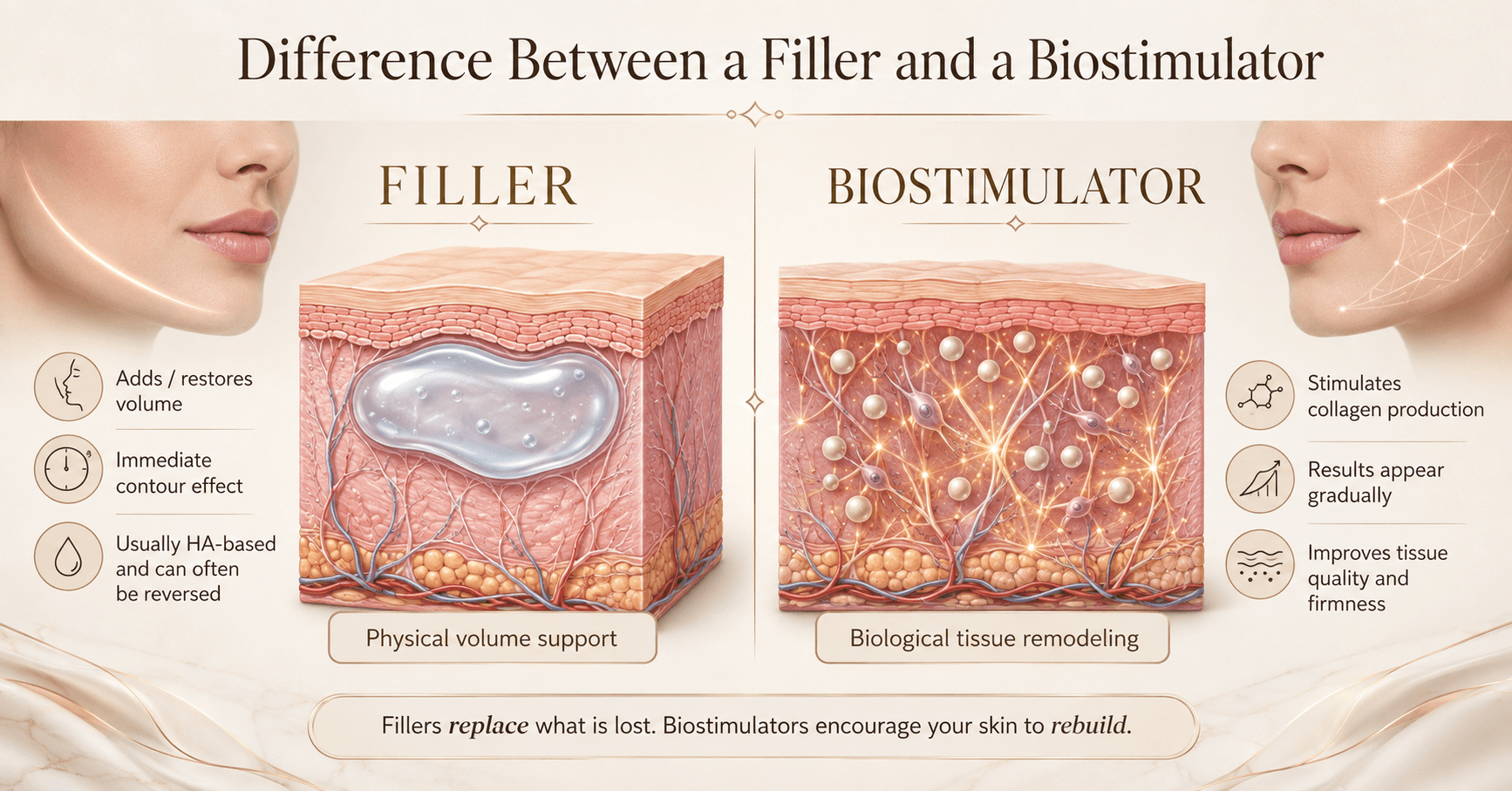
A filler predominantly adds or restores physical volume; a biostimulator is used primarily to induce the patient’s own tissue to produce structural components such as collagen.
The distinction is useful, although it is not absolute.
Hyaluronic Acid Fillers
Traditional hyaluronic acid, or HA fillers, are gels placed into carefully selected anatomical layers.
Depending on their formulation and rheological properties, they can be used to:
- Restore cheek volume
- Support the temples
- Improve chin projection
- Define the jawline
- Restore lip shape or volume
- Correct selected folds and depressions
- Replace age-related soft-tissue loss
Their effect is visible immediately, although swelling can temporarily alter the early result.
HA itself can also interact with surrounding tissue, but clinically its principal role remains physical tissue restoration and contouring.
For a deeper discussion about filler longevity, migration and the risk of over-volumization, read my article on hyaluronic acid filler myths.
Biostimulators
A collagen biostimulator is selected primarily because of the biological tissue response it initiates after injection.
Two of the best-known examples are:
- Calcium hydroxylapatite — CaHA, commonly associated with Radiesse
- Poly-L-lactic acid — PLLA, commonly associated with Sculptra
The visible result is therefore not simply the material sitting underneath the skin.
Over time, tissue remodeling contributes increasingly to the clinical improvement.
Modern literature supports a regenerative and biostimulatory role for CaHA, including effects involving collagen, elastin and other extracellular-matrix components.
Read the PubMed-indexed consensus on regenerative biostimulation with calcium hydroxylapatite
What Exactly Is a Skin Booster?
“Skin booster” is a clinical and commercial umbrella term rather than one scientifically standardized substance.
Most patients use the phrase to describe injectable treatments placed relatively superficially to improve hydration, elasticity, texture, fine lines and overall skin quality, rather than to create obvious facial volume.
This category can include different materials depending on the product and country, including:
- Non-cross-linked or lightly cross-linked hyaluronic acid
- Polynucleotides
- PDRN-containing formulations
- Amino-acid combinations
- Other biorevitalization formulations
This is why asking simply for “a skin booster” is similar to asking for “a laser.” The name of the category does not tell us enough.
We need to know:
- What is in the syringe?
- At what concentration?
- How is it manufactured?
- Where will it be injected?
- What clinical outcome is supported by evidence for that particular formulation?
A systematic review of injectable HA for facial skin quality found encouraging improvements in parameters such as hydration, firmness, radiance, texture and elasticity, while also emphasizing the limitations of the available evidence and the need for larger randomized trials.
Read the systematic review on injectable hyaluronic acid and skin quality
You can also explore my Regenerative Aesthetics & Skin Rejuvenation treatments in Jeddah.
Is a Skin Booster the Same as Filler?
Not usually, although both may contain hyaluronic acid.
What matters is not simply whether a syringe says “HA.”
The physical properties of HA products vary significantly.
A structural filler may be engineered to provide:
- Projection
- Lift
- Shape retention
- Mechanical support
A skin-quality HA product may instead be designed for:
- Tissue hydration
- Broad superficial distribution
- Minimal contour alteration
- Improvement in fine texture
This is one reason patients should not choose injections solely from a treatment menu.
The same molecule can behave very differently depending on cross-linking, concentration, rheology, injection depth, volume and anatomical location.
Which Injectable Improves Hydration, Volume, Laxity or Collagen?
A useful way to think about treatment is to match the problem to the mechanism.
If Your Main Problem Is Dehydration
A properly selected HA skin booster may be appropriate.
The goal is usually improved hydration and skin quality rather than facial reshaping.
If Your Main Problem Is Volume Loss
A hyaluronic acid filler is usually more predictable because physical replacement is actually required.
Collagen stimulation cannot always recreate a specific anatomical structure with the precision achievable using a carefully selected filler.
If Your Main Problem Is Loss of Firmness or Early Laxity
Depending on anatomy, age, skin thickness and degree of laxity, options may include:
- Diluted or hyperdiluted CaHA
- PLLA
- Energy-based collagen remodeling
- Combination treatment
However, no injectable can reproduce the mechanical lifting capacity of surgery in patients with significant tissue descent.
If Your Main Problem Is Collagen Loss
CaHA and PLLA have substantially more established histories as injectable collagen biostimulators than many newer treatments being described online as regenerative.
If Your Main Problem Is Surface Texture
Options may include:
- Skin boosters
- Polynucleotides
- Microneedling
- Fractional laser
- Radiofrequency microneedling
- Chemical resurfacing
The correct choice depends on whether the “texture” is caused by dehydration, pores, acne scarring, photodamage, laxity, wrinkles or pigmentation.
One injectable cannot solve every category of skin aging.
For acne scarring and textural problems, treatment often needs a completely different strategy. You can read more in my guide to acne scar treatment in Jeddah.
Will Biostimulators Make My Face Look Fuller?
They can, but the degree depends on the product, concentration, amount, injection technique and treatment objective.
This is an important misconception.
Some patients hear “collagen stimulation” and imagine that there is no possibility of volume change.
That is incorrect.
With PLLA
Part of the desired effect is often a gradual increase in tissue thickness and volume resulting from collagen formation.
This can be extremely elegant when appropriately planned.
It can also be inappropriate in somebody whose face is already broad, heavy or volumized in the area being considered.
With CaHA
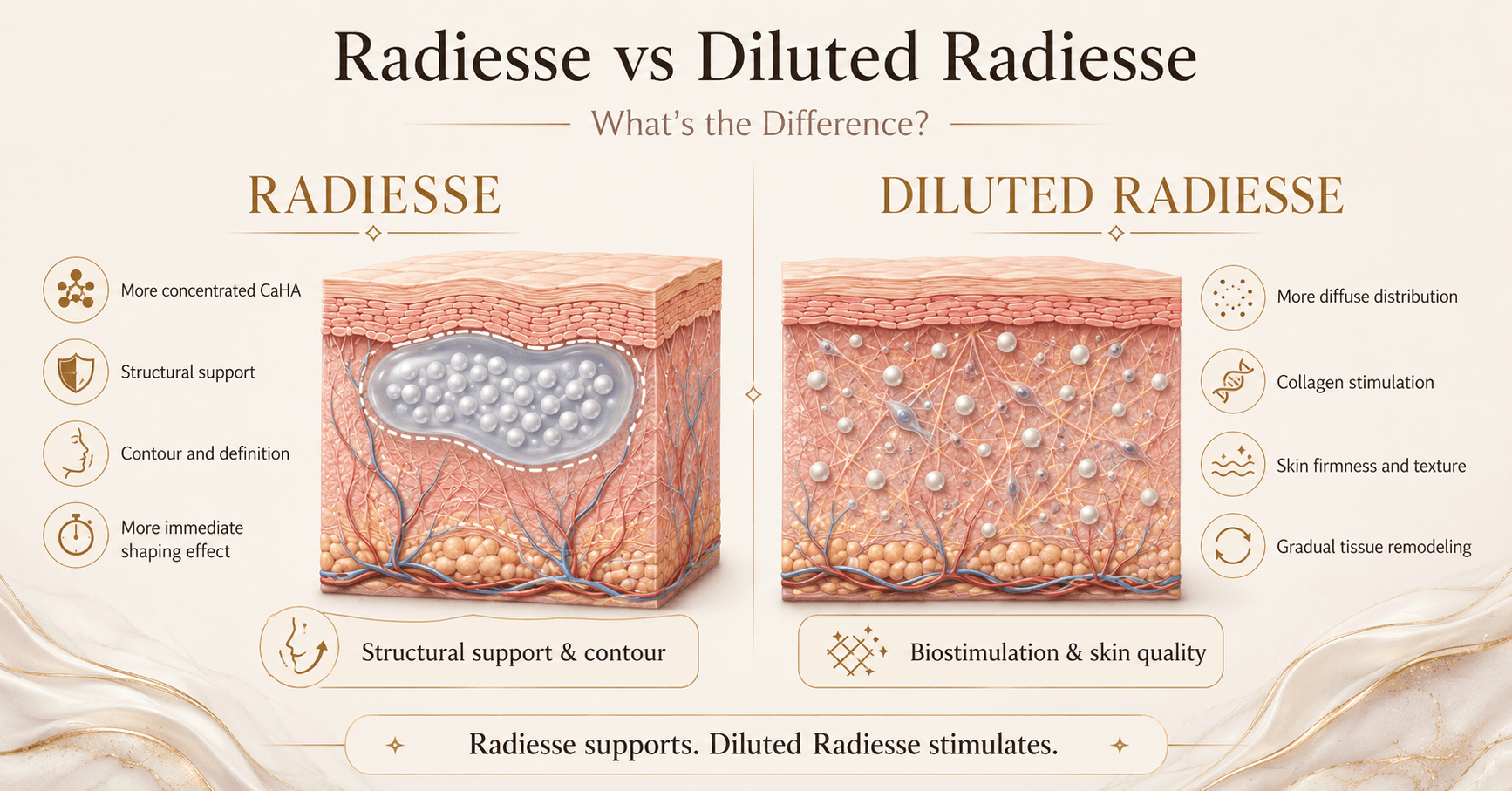
Undiluted CaHA has an immediate physical presence and can provide structural contouring in selected indications.
When appropriately diluted or hyperdiluted, the treatment strategy may shift more toward skin-quality and tissue-remodeling effects with less emphasis on projection.
The concept that “biostimulator equals zero volume” is therefore oversimplified.
What Is Radiesse?
Radiesse is a calcium hydroxylapatite, or CaHA, based injectable.
Its microspheres are suspended in a carrier gel.
Depending on the indication and how the material is prepared and placed, CaHA can provide a combination of:
- Initial structural effect
- Tissue support
- Collagen stimulation
- Elastin-associated remodeling
- Improvement in selected skin-quality parameters
Modern consensus literature describes CaHA as an injectable with evidence supporting regenerative biostimulation and extracellular-matrix remodeling.
Read the CaHA regenerative biostimulation consensus on PubMed
What Is Diluted or Hyperdiluted Radiesse?
Dilution changes the way CaHA is used clinically.
Instead of concentrating the material primarily for projection or contour, the product can be distributed more broadly through appropriate tissue planes.
This approach is often considered for areas such as:
- Face
- Neck
- Décolletage
- Arms
- Abdomen
- Selected areas of the body
The objective becomes increasingly focused on skin quality and biostimulation rather than traditional filling.
Treatment protocols are anatomy-, indication- and product-specific.
For more information about the injectable treatments available within my practice, visit Advanced Injectables & Facial Contouring.
What Is Sculptra?
Sculptra contains poly-L-lactic acid, or PLLA, a biodegradable synthetic polymer used as a collagen biostimulator.
Unlike an HA filler, its principal long-term effect does not come from leaving a permanent gel-shaped implant underneath a wrinkle.
Instead, PLLA particles trigger a controlled tissue response that leads progressively to collagen deposition.
Results therefore develop gradually.
PLLA has a long history in aesthetic medicine, although protocols, indications and regulatory approvals vary by country.
Radiesse vs Sculptra: What Is the Difference?
Both are collagen biostimulators, but they are not interchangeable.
| Feature | Radiesse / CaHA | Sculptra / PLLA |
|---|---|---|
| Main material | Calcium hydroxylapatite | Poly-L-lactic acid |
| Immediate visual effect | Can be present, particularly when used undiluted | Initial water-related fullness subsides; true result develops later |
| Collagen stimulation | Yes | Yes |
| Skin-quality use | Particularly relevant with diluted/hyperdiluted techniques | Possible, depending on indication and technique |
| Structural contouring | Can provide immediate structural support in selected uses | Less suited to precision HA-style contouring |
| Onset | Some immediate effect plus progressive remodeling | Primarily gradual |
| Enzymatically reversible like HA | No | No |
| Treatment planning | Concentration and plane can be varied significantly | Usually planned as progressive collagen restoration |
| Typical philosophy | Can bridge structure and biostimulation | Progressive collagen-driven restoration |
There is no universal answer to “Is Radiesse better than Sculptra?”
For one patient, CaHA may better address dermal quality and structural support.
For another, gradual PLLA-mediated collagen restoration may be more appropriate.
For somebody else, neither may be required.
The face must be assessed before the syringe is chosen.
What Are Hybrid Fillers?
Hybrid fillers combine two different treatment concepts—most commonly hyaluronic acid for immediate physical correction and calcium hydroxylapatite for longer-term biostimulation.
Some commercial hybrid products contain both components in the same product, while other clinical approaches combine HA and CaHA separately.
This can theoretically provide:
HA → early hydration, volume or structural effect
plus
CaHA → progressive tissue remodeling and collagen stimulation
Clinical and ultrasound studies of HA-CaHA hybrid formulations have demonstrated increased dermal thickness and aesthetic improvement, although the evidence base remains smaller than that for conventional HA fillers.
Read the clinical and sonographic study of HA-CaHA hybrid treatment
A recent systematic review also concluded that combined and hybrid HA-CaHA approaches appear promising while emphasizing the need for stronger long-term trials and standardized protocols.
Read the systematic review of HA and CaHA combination treatments
Are Hybrid Fillers Reversible?
This is particularly important.
The HA component may be susceptible to hyaluronidase, but the CaHA component is not removed by hyaluronidase.
A hybrid product therefore should not simply be described to patients as “reversible filler.”
The reversibility discussion must reflect every component in the syringe.
Are PDRN and Polynucleotides the Same?
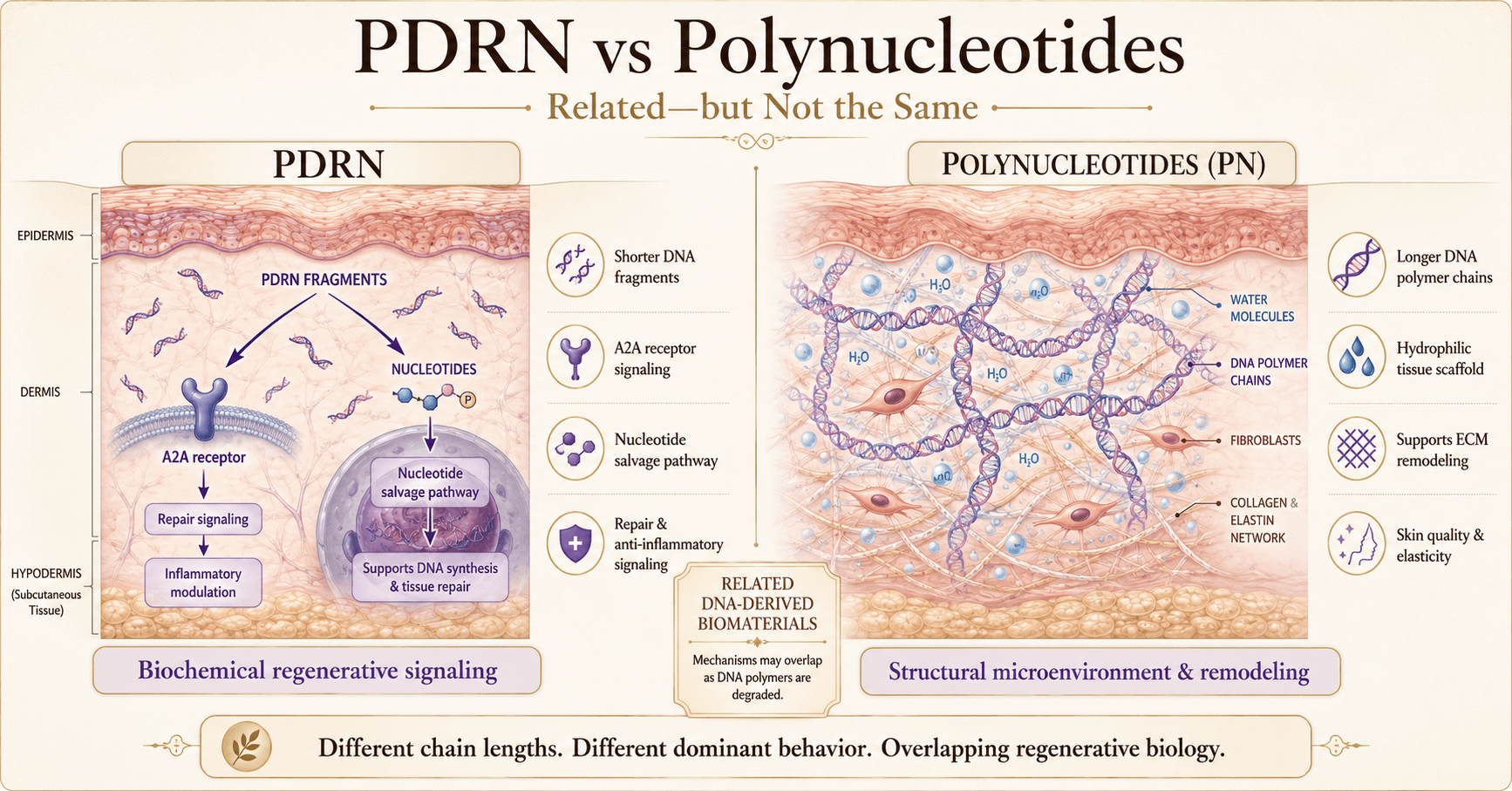
No. The terms are closely related and are frequently blurred in aesthetic marketing, but they should not automatically be treated as chemically or pharmacologically identical.
Polynucleotides
Polynucleotides, often abbreviated PN, consist of polymeric chains of nucleotides.
Products marketed for aesthetic use may contain purified polynucleotide material derived from controlled biological sources, commonly fish-derived DNA.
They are proposed to influence tissue repair, hydration and fibroblast activity.
PDRN
Polydeoxyribonucleotide, or PDRN, refers to deoxyribonucleotide polymer fragments, with much of its earlier medical literature centered around tissue repair and wound-healing biology.
There is overlap in the scientific literature, terminology and commercial positioning of PN and PDRN, but they should not simply be assumed to be interchangeable formulations.
A recent systematic review of PN aesthetic treatments found promising improvements in wrinkles, texture and elasticity, but included only a relatively small number of studies and emphasized the need for stronger clinical trials.
Read the systematic review on polynucleotides in aesthetic medicine
That is a more balanced interpretation than saying that polynucleotides have already been conclusively proven to “regenerate the skin.”
What Can Polynucleotides Actually Improve?
Current clinical studies suggest potential improvements in:
- Skin texture
- Fine wrinkles
- Elasticity
- Hydration
- Periocular skin quality
- Overall skin appearance
The evidence is encouraging, but it remains less mature than the evidence and clinical experience available for established HA fillers and collagen biostimulators.
That distinction is important.
A treatment can be promising without being ineffective.
It can also be promising without being scientifically proven to do everything claimed on social media.
Are Polynucleotides Good for the Under-Eye Area?
They have become particularly popular for periocular skin because patients often want better-quality under-eye skin without adding obvious volume.
That can be a reasonable treatment objective.
However, “dark circles” are not one diagnosis.
Under-eye darkness may result from:
- Tear-trough anatomy
- Thin translucent skin
- Visible vessels
- Pigmentation
- Shadowing
- Orbital fat changes
- Skin laxity
- Eczema
- A combination of factors
Polynucleotides cannot replace a proper diagnosis.
A treatment that improves skin quality will not necessarily correct a deep anatomical hollow, and filling a hollow will not necessarily correct pigmentation.
What About PDRN Treatment in Jeddah?
Patients searching for PDRN treatment in Jeddah should first establish exactly what product is being offered.
Ask:
- Is it PDRN, PN or a mixture?
- What is the manufacturer?
- What is the concentration?
- What is its regulatory status in Saudi Arabia?
- Is the proposed route of administration consistent with the product’s authorized use?
- What evidence exists for that exact product?
- Who is performing the injection?
- What complication-management facilities are available?
“Salmon DNA,” “DNA rejuvenation” and similar social-media phrases are not adequate descriptions of a medical injectable.
What Are Exosomes?
Exosomes are nanoscale extracellular vesicles released by cells that carry biological signals, including proteins, lipids and nucleic-acid cargo.
Their biological role in cell-to-cell communication makes them scientifically fascinating.
It has also made them one of the most heavily marketed terms in regenerative aesthetics.
The problem is that “exosome” does not describe one standardized pharmaceutical product.
Products may differ in:
- Cell or biological source
- Isolation methodology
- Purity
- Characterization
- Particle concentration
- Storage
- Manufacturing standards
- Contaminants
- Biological cargo
- Route of administration
These differences matter enormously.
Do Exosome Injections Have Good Clinical Evidence?
There is meaningful emerging human evidence for exosome and extracellular-vesicle approaches in aesthetic medicine, but the literature is heterogeneous and does not justify treating every commercially marketed “exosome” product as proven or equivalent.
A recent systematic review and meta-analysis found encouraging improvements across a range of skin and hair outcomes while highlighting substantial variability in exosome source, treatment protocol and study methodology.
Read the systematic review and meta-analysis of exosome-based therapies in aesthetic medicine
Regulatory caution is also important. The US Food and Drug Administration states that there are currently no FDA-approved exosome products and has reported serious adverse events involving unapproved products marketed as exosomes.
Read the FDA Public Safety Notification on Exosome Products
That does not mean that extracellular-vesicle science has no future.
It means patients and physicians should distinguish between:
promising science
and
a specific commercially available product with proven quality, safety, efficacy and regulatory authorization.
Are Topical Exosomes After Microneedling the Same as Injecting Exosomes?
No. Route of administration matters.
A product used topically on the skin after a procedure does not automatically have the same safety profile, pharmacology or regulatory status when injected into living tissue.
This distinction is frequently overlooked.
Patients should never assume that because an ingredient can be applied after laser or microneedling, it can safely be injected intradermally or subcutaneously.
Which Injectable Can Be Reversed?
This is one of the most important questions to ask before treatment.
Hyaluronic Acid
HA is the principal injectable category for which we have an enzyme—hyaluronidase—that can break down the material.
This provides an important safety and correction tool.
However, “reversible” should not be interpreted as:
- Risk-free
- Instantly predictable in every situation
- A guarantee that every complication can be completely undone
Vascular complications from filler remain medical emergencies.
Calcium Hydroxylapatite / Radiesse
CaHA cannot be dissolved with hyaluronidase.
PLLA / Sculptra
PLLA cannot be enzymatically dissolved with hyaluronidase.
Polynucleotides and PDRN
These do not have a routine clinical dissolving enzyme comparable with hyaluronidase for HA fillers.
Hybrid HA-CaHA Fillers
Only the HA component is susceptible to hyaluronidase.
The CaHA component remains.
This is why reversibility should be part of informed consent rather than an afterthought.
Which Treatment Has the Lowest Risk of Looking Overfilled?
The treatment least likely to produce an overfilled appearance is the one that does not unnecessarily add volume to a face that does not need volume.
For a patient whose problem is mainly skin quality, using:
- A skin-quality treatment
- A collagen-remodeling strategy
- Energy-based treatment
- Conservative biostimulation
may preserve facial proportions better than repeatedly filling every line or hollow.
However, biostimulators are not automatically incapable of creating excess fullness.
The most important determinants of an unnatural result remain:
- Incorrect diagnosis
- Excessive treatment
- Repeated treatment before reassessment
- Poor product selection
- Incorrect anatomical plane
- Treating individual lines instead of the aging process
- Failure to recognize when the face has enough volume
My preferred principle is:
Do not use volume to treat a problem that is not caused by volume loss.
Why Do Some Faces Become Overfilled?
Facial aging is not simply “loss of filler.”
It involves changes in:
- Bone
- Deep and superficial fat compartments
- Ligaments
- Muscle
- Fascia
- Dermis
- Collagen and elastin
- Skin surface
- Pigmentation
Trying to correct every manifestation of aging with filler can progressively distort facial proportions.
This is the background to the social-media phenomenon often described as “pillow face.”
The problem is not that HA filler inevitably makes faces unnatural.
The problem is repeated volumization without adequate anatomical reassessment.
I discuss this in greater detail in The Scientific Realities Behind Hyaluronic Acid Filler Myths.
How Long Do Skin Boosters Take to Work?
The answer depends on the product.
For HA skin boosters:
- Some hydration-related changes may be noticed relatively early.
- Skin texture and quality are usually assessed over subsequent weeks.
- A treatment course rather than a single injection may be recommended depending on the formulation.
Do not judge the final result immediately after treatment because early swelling can temporarily improve fine lines.
How Long Does Radiesse Take to Work?
When CaHA is used in a way that provides structural correction, there can be an immediate visible effect.
Biostimulatory remodeling develops progressively over subsequent weeks and months.
When diluted techniques are used primarily for skin quality, the goal is less about immediate filling and more about gradual tissue change.
How Long Does Sculptra Take to Work?
Sculptra is deliberately gradual.
The fluid used during treatment can initially make the face appear fuller, but much of this early volume is temporary.
The clinically important result develops as collagen remodeling progresses.
Patients should therefore expect changes over weeks to months rather than days.
This makes PLLA poorly suited to patients seeking an immediately finalized result just before an event.
How Long Do Polynucleotides Take to Work?
There is no universally standardized timeline because:
- Products differ
- Treatment protocols differ
- Injection concentrations differ
- Outcomes studied differ
Clinical improvement is generally assessed progressively over several weeks and often after a treatment course rather than after a single injection.
How Long Do Exosomes Take to Work?
There is no scientifically defensible universal answer for “exosome treatment” because commercially available products and treatment protocols are too heterogeneous.
Any clinic advertising a precise universal timeline for all exosome products should be able to show evidence supporting that specific formulation and route of administration.
How Long Do Results Last?
Duration varies according to:
- Material
- Product formulation
- Treatment area
- Injection depth
- Amount used
- Individual anatomy
- Metabolism
- Tissue quality
- Previous treatments
- Treatment interval
It is therefore misleading to promise a single duration for an entire category.
HA Fillers
HA fillers often persist for many months, and some products in some anatomical compartments can remain detectable significantly longer than traditional marketing timelines suggest.
CaHA
The carrier and CaHA particles do not simply behave as a permanent implant. The clinical effect evolves as the material is resorbed and tissue remodeling contributes to the result.
PLLA
Results emerge gradually and may persist for a prolonged period as the collagen response develops and subsequently undergoes normal biological turnover.
Skin Boosters and Polynucleotides
They are generally treated as maintenance-based skin-quality treatments rather than permanent structural corrections.
Can Fillers and Biostimulators Be Combined?
Yes—when different components of facial aging require different mechanisms of treatment.
Combination treatment can be extremely logical.
For example:
- Structural HA filler may restore a true skeletal or soft-tissue deficit.
- CaHA may address tissue quality elsewhere.
- A skin booster may improve hydration.
- Energy-based treatment may address laxity or photoaging.
- Botulinum toxin may address excessive muscular contraction.
This is fundamentally different from simply adding multiple products because they are fashionable.
A multimodality plan should have one diagnosis and several targeted solutions, not several syringes searching for a diagnosis.
Botulinum toxin also addresses a completely different component of facial aging: muscle activity. You can read more about maintaining natural facial movement in my guide to natural Botox results.
Can Radiesse and HA Filler Be Used Together?
Yes.
They may be:
- Used in different anatomical areas
- Used at different tissue depths
- Used in different treatment sessions
- Incorporated into selected combined or hybrid strategies
Published studies support the biological plausibility and clinical usefulness of HA-CaHA combination approaches, although protocol heterogeneity remains significant.
Can Sculptra and Fillers Be Combined?
Yes, but the treatment plan should account for the fact that PLLA continues to create progressive tissue change.
A patient receiving both should not automatically be “topped up” with filler before the developing PLLA result is properly assessed.
Patience is part of good aesthetic treatment.
Do I Need Filler If I Am Already Having a Biostimulator?
Not necessarily.
A patient can have excellent skin firmness but still possess:
- A recessed chin
- A genetically flat midface
- Localized temple hollowing
- Lip-volume loss
These are structural problems that may benefit from a filler.
Conversely, a patient may have adequate facial volume but declining skin quality. Adding more filler to such a patient may be unnecessary.
Biostimulation and volume replacement answer different anatomical questions.
Why Is This Particularly Relevant for Patients in Jeddah and Saudi Arabia?
Living in Jeddah creates a particular environmental context for skin care, but it should not be used as a marketing reason to inject everyone.
Jeddah is characterized by:
- Strong UV exposure
- High temperatures
- Significant humidity
- Frequent transitions between outdoor heat and air-conditioned indoor environments
These factors can influence:
- Photodamage
- Pigmentation
- Skin-barrier function
- Perceived dehydration
- Inflammation
- Daily sunscreen requirements
Many Saudi and Middle Eastern patients also have Fitzpatrick skin phototypes III–V, in which avoiding unnecessary inflammation and post-inflammatory pigmentation is particularly important.
However, an injectable is not a substitute for:
- Daily photoprotection
- Appropriate skincare
- Pigmentation treatment
- Medical management of acne, rosacea or dermatitis
- Resurfacing where indicated
A patient searching for skin boosters in Jeddah may actually need treatment for photodamage or melasma rather than an injection.
Diagnosis comes first.
Can Skin Boosters Treat Pigmentation or Melasma?
They are not primary treatments for melasma.
Hydrated, healthier-looking skin may appear brighter, but pigmentation disorders require diagnosis.
Melasma management may involve:
- Rigorous photoprotection
- Visible-light protection
- Topical depigmenting therapy
- Selected oral medication where medically appropriate
- Chemical peels
- Carefully selected energy-based treatments
- Long-term maintenance
Injecting something described as a “glow treatment” does not treat the biological drivers of melasma.
Are These Treatments Safe for Middle Eastern and Melanin-Rich Skin?
The injectable materials discussed here are not generally selected according to Fitzpatrick phototype in the same way that a laser wavelength is selected, but skin type still matters clinically.
Bruising, inflammatory reactions, nodules and trauma may leave pigmentation for longer in patients prone to post-inflammatory hyperpigmentation.
The physician should also recognize underlying:
- Melasma
- Acne
- Active dermatitis
- Infection
- Inflammatory skin disease
before elective treatment.
What Are the Risks of Fillers and Biostimulators?
Common temporary effects can include:
- Swelling
- Tenderness
- Redness
- Bruising
- Injection-site discomfort
- Temporary asymmetry
Depending on the material and technique, less common complications can include:
- Persistent nodules
- Delayed inflammatory reactions
- Infection
- Granulomatous reactions
- Irregularity
- Product visibility
- Prolonged edema
- Unwanted fullness
The Most Serious Risk: Vascular Compromise
Any facial injectable placed with a needle or cannula near blood vessels requires anatomical expertise.
Accidental intravascular injection can cause tissue ischemia and, in rare circumstances, catastrophic complications including visual loss.
Published CaHA complication-management literature emphasizes that intra-arterial injection, although uncommon, must be anticipated and managed as an emergency.
Read the expert consensus on managing intravascular CaHA complications
This is why cosmetic injections belong in an appropriate medical environment—not a salon, home, hotel room or informal beauty setting.
Who Should Avoid or Postpone Injectable Treatments?
Elective injections may need to be avoided or postponed in patients with:
- Active infection at the injection site
- Significant active inflammatory skin disease
- Uncontrolled systemic illness
- Known allergy or hypersensitivity to relevant product components
- Previous serious reaction to the proposed injectable
- Unrealistic expectations
- Body dysmorphic concerns requiring further evaluation
- Inability to understand or provide informed consent
Additional caution may apply in people with:
- Autoimmune disease
- Immunosuppression
- Bleeding disorders
- Anticoagulant treatment
- Previous facial implants or permanent fillers
- Previous unexplained filler complications
- Upcoming dental or surgical procedures
- Significant allergy histories
Pregnancy and Breastfeeding
For elective cosmetic injectables, clinical safety data during pregnancy are generally insufficient.
In most circumstances, postponing non-essential aesthetic injections until after pregnancy is the prudent approach.
Breastfeeding decisions should similarly be discussed individually with the treating doctor because evidence varies by treatment.
Should I Stop Blood Thinners Before Filler?
Do not stop prescribed anticoagulants or antiplatelet medication solely to reduce bruising without the approval of the doctor who prescribed them.
The medical risk of stopping necessary medication can be substantially greater than the inconvenience of a bruise.
Always disclose:
- Prescription medicines
- Aspirin
- Anticoagulants
- Anti-inflammatory medicines
- Supplements
- Previous filler
- Previous biostimulator treatments
- Previous reactions
before treatment.
What Should I Avoid Before Treatment?
Your doctor may provide product-specific instructions.
Useful general principles include:
- Avoid treatment over active infection or inflamed skin.
- Tell your doctor about medications and supplements.
- Mention previous fillers, threads, implants or surgery.
- Inform your physician about previous cold sores when treating susceptible areas.
- Do not schedule a first treatment immediately before a wedding or major event.
- Avoid arriving with pressure to proceed simply because you have already booked the appointment.
A consultation should leave room for the answer:
“You do not need an injectable today.”
What Is the Downtime?
For many injectable treatments, patients return to routine activity quickly, but “no downtime” is an unrealistic promise.
Possible visible effects include:
- Needle marks
- Small bumps
- Redness
- Swelling
- Bruising
Skin boosters and polynucleotide injections may leave temporary papules depending on technique.
Filler swelling can be greater in some areas, particularly the lips.
Biostimulatory procedures may cause temporary tenderness or swelling.
Plan conservatively before photographs, weddings, travel or important professional events.
What Does the Scientific Evidence Say?
The evidence is not equally strong for every category.
Hyaluronic Acid Fillers
Evidence maturity: Established
HA fillers have a substantial clinical history for facial volume restoration and contouring.
Product-specific differences remain important.
Injectable HA Skin Boosters
Evidence maturity: Moderate and encouraging
Systematic review data support improvements in hydration and multiple skin-quality measures, but many studies remain small and heterogeneous.
CaHA / Radiesse
Evidence maturity: Established for specific aesthetic uses, with a growing biostimulation and regenerative literature
Evidence supports collagen-related remodeling and broader extracellular-matrix effects.
Read the CaHA regenerative consensus
PLLA / Sculptra
Evidence maturity: Established as a collagen biostimulator
It has a long aesthetic history and should be regarded as a progressive collagen-restoration treatment rather than an instantly reversible filler.
Polynucleotides
Evidence maturity: Promising but developing
Recent systematic-review evidence has found encouraging results while emphasizing the relatively limited number and quality of available trials.
Hybrid HA-CaHA Products
Evidence maturity: Promising and expanding
Studies demonstrate both immediate aesthetic effects and measurable dermal changes, but the literature is still smaller than that for established HA filler technologies.
Read the HA-CaHA clinical study
Exosomes / Extracellular Vesicles
Evidence maturity: Emerging
Human evidence has expanded substantially, but heterogeneity of source, processing, route of administration and product characterization remains a major limitation.
Read the systematic review and meta-analysis
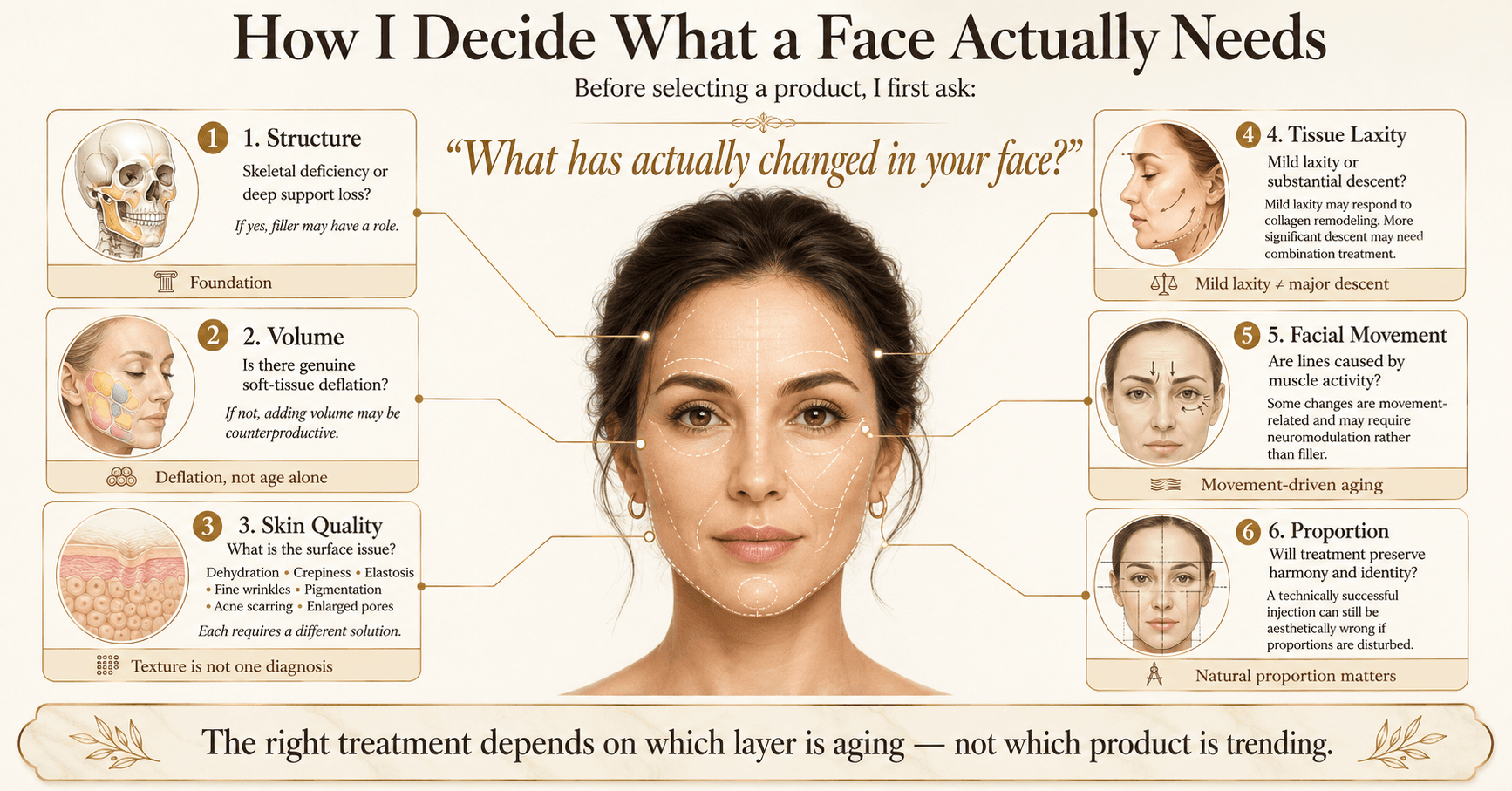
How I Decide What a Face Actually Needs
Before selecting a product, I prefer to separate facial aging into several layers.
1. Structure
Is there skeletal deficiency or true loss of deep support?
If yes, filler may have a role.
2. Volume
Is there genuine soft-tissue deflation?
If not, adding volume merely because the patient is older may be counterproductive.
3. Skin Quality
Is the primary problem:
- Dehydration?
- Crepiness?
- Elastosis?
- Fine wrinkles?
- Pigmentation?
- Acne scarring?
- Enlarged pores?
Each requires a different solution.
4. Tissue Laxity
Is the tissue mildly lax and suitable for collagen remodeling, or is there substantial descent that an injectable cannot realistically correct?
5. Facial Movement
Some apparent lines and contour changes are caused by muscle activity rather than volume loss.
That may require neuromodulation rather than filler.
You can read more about my approach to maintaining expression in Botox in 2026: Look Refreshed, Not Frozen.
6. Proportion
A technically successful injection can still be aesthetically wrong if it disturbs facial proportions or identity.
That is why treatment should never begin with:
“Which syringe would you like?”
It should begin with:
“What has actually changed in your face?”
What I Tell My Patients in Jeddah
The modern aesthetic consultation is becoming less about filling and more about diagnosis, restraint and tissue quality.
My own philosophy is to use:
the right product, in the right tissue layer, for the right biological reason—and only in the amount the face actually needs.
If hydration is the problem, adding cheek volume is not the answer.
If structural support is missing, a superficial skin booster cannot recreate bone or deep fat.
If collagen has declined, endlessly layering HA filler may not be the most elegant long-term strategy.
If a face already has adequate volume, the most natural treatment may involve skin-quality improvement or collagen remodeling rather than additional filling.
The goal should not be to make an injected face.
It should be to preserve the person’s anatomy, movement and identity while treating the specific components of aging that genuinely require correction.
Frequently Asked Questions
Is a skin booster better than filler?
Neither is universally better because they treat different problems.
Skin boosters generally target hydration and skin quality. Fillers are more suitable when a patient genuinely requires volume restoration, projection or structural contouring.
Is Radiesse a filler or a biostimulator?
It can function as both, depending on how it is used.
Undiluted CaHA can have an immediate structural effect, while diluted or hyperdiluted approaches place greater emphasis on collagen stimulation and skin-quality remodeling.
Is Sculptra a filler?
Sculptra is more accurately described as a PLLA collagen biostimulator.
The visible long-term effect develops mainly through the body’s tissue response rather than a persistent HA-like gel.
Which Is Better: Radiesse or Sculptra?
The better choice depends on the treatment objective and anatomy.
CaHA can combine immediate structural properties with biostimulation, while PLLA is particularly suited to gradual collagen-driven restoration.
Neither should be selected without assessment.
Will Sculptra Make My Face Fat?
It should not simply make the face “fat,” but it can increase tissue fullness.
That is part of its therapeutic effect. Excessive or poorly selected treatment can therefore be inappropriate in a face that already has adequate volume.
Does Radiesse Add Volume?
Yes, particularly when used in its less-diluted structural form.
When diluted for broader biostimulation, the aim may be skin quality rather than substantial projection.
What Is the Best Treatment for Skin Hydration?
Injectable HA skin boosters have the clearest direct rationale when the principal goal is dermal hydration.
However, dry skin may also reflect barrier dysfunction, eczema, excessive exfoliation or environmental factors and should not automatically be treated with injections.
Which Injectable Makes the Skin Glow?
“Glow” is not a medical diagnosis.
Hydration, smoothness, pigmentation, vascularity, texture and light reflection all influence perceived radiance.
The correct treatment depends on which of these is impaired.
Are PDRN and Salmon DNA the Same Thing?
“Salmon DNA” is an imprecise marketing phrase.
PDRN and many aesthetic polynucleotide preparations may be produced from highly purified fish-derived DNA sources, but patients should ask for the exact product, composition and regulatory status rather than relying on the phrase “salmon DNA.”
Are PDRN and Polynucleotides the Same Treatment?
Not necessarily.
The terms overlap in commercial aesthetic use but do not automatically refer to identical molecular formulations.
Do Polynucleotides Actually Stimulate Collagen?
There are plausible biological mechanisms and encouraging clinical data suggesting tissue-remodeling effects, but the current aesthetic evidence remains smaller and less robust than for established collagen biostimulators.
Are Polynucleotides Better Than Skin Boosters?
Not universally.
If hydration is the dominant issue, an HA skin booster may be more logical. For selected tissue-quality concerns, a PN product may be considered.
Sometimes neither is the most appropriate treatment.
Are Exosomes Scientifically Proven for Skin Rejuvenation?
The science is promising, and human clinical evidence is expanding, but “exosomes” remain a heterogeneous category.
The existence of positive studies does not establish that every commercial exosome formulation or injectable protocol is safe, equivalent or effective.
Read the latest systematic review and meta-analysis
Are Exosome Injections FDA Approved?
No exosome product is currently FDA-approved in the United States according to the FDA.
Regulatory authorization in Saudi Arabia should be checked for the specific product and intended use rather than inferred from marketing.
Read the FDA safety notification
Which Filler Can Be Dissolved?
Hyaluronic acid filler can be enzymatically degraded using hyaluronidase.
CaHA and PLLA cannot be dissolved using hyaluronidase.
Can Radiesse Be Dissolved?
Not with hyaluronidase.
This should be understood before treatment.
Can Sculptra Be Dissolved?
No equivalent hyaluronidase-style reversal exists for PLLA.
Careful product preparation, injection technique and patient selection are therefore particularly important.
What Injectable Is Least Likely to Give Me Pillow Face?
A treatment plan that avoids unnecessary volume is least likely to create an overfilled appearance.
For some patients, that means skin-quality treatment or biostimulation. For others, a small amount of precisely placed HA may actually produce the most natural correction.
How Many Skin Booster Sessions Do I Need?
It depends on the specific formulation.
Many protocols involve an initial course followed by maintenance, but there is no scientifically valid session number for every product marketed as a “skin booster.”
How Many Sculptra Sessions Do I Need?
PLLA treatment is individualized according to age, baseline tissue loss, treatment area and desired correction.
A course of treatment is common, with sufficient time between sessions to evaluate developing collagen rather than treating too aggressively.
Can I Combine a Skin Booster With Botox?
Yes, when both are independently indicated.
Botulinum toxin alters muscle activity, while a skin booster targets skin quality.
Their mechanisms are different.
Can I Combine Botox, Filler and a Biostimulator?
Yes, but more products do not automatically produce a better result.
Combination treatment is appropriate when separate anatomical problems have been identified and each treatment has a defined purpose.
Can I Have These Injections Before My Wedding?
It is safer to plan well in advance.
Swelling, bruising and asymmetry can occur even after technically excellent treatment. Progressive treatments such as PLLA also need time to develop.
What Should I Ask Before Booking a Skin Booster in Jeddah?
Ask:
- What exact product are you injecting?
- Is it HA, PN, PDRN, CaHA or something else?
- Who manufactured it?
- Is it appropriately authorized for use in Saudi Arabia?
- What outcome are we treating?
- What evidence supports this use?
- Is it reversible?
- What complications can occur?
- Who will manage a complication if one occurs?
These questions are more useful than asking which treatment is currently trending.
The Takeaway
Skin boosters, dermal fillers and biostimulators are not competitors. They are different tools for different tissue problems.
HA fillers are most useful when genuine structural or volume correction is required.
HA skin boosters are primarily skin-quality and hydration treatments.
CaHA and PLLA provide collagen biostimulation through different biological and physical mechanisms.
Polynucleotides and PDRN are promising regenerative treatments, although their aesthetic evidence base is still developing.
Hybrid fillers attempt to combine immediate HA correction with longer-term biostimulation.
Exosome science is advancing rapidly, but individual commercial products and routes of administration must be judged far more critically than their marketing names suggest.
For patients seeking natural filler results in Jeddah, the most important principle is therefore not to replace filler with the latest fashionable injectable.
It is to diagnose the face correctly.
Hydrate what is dehydrated.
Restore what has genuinely been lost.
Stimulate what requires biological support.
Treat laxity as laxity.
Treat pigmentation as pigmentation.
And do not add volume where volume is not missing.
Clinical References
-
Ghatge AS, Ghatge SB. The Effectiveness of Injectable Hyaluronic Acid in the Improvement of the Facial Skin Quality: A Systematic Review. Clinical, Cosmetic and Investigational Dermatology. 2023;16:891-899. PubMed | DOI
-
Rho NK, Kim HS, Kim SY, Lee W. Injectable “Skin Boosters” in Aging Skin Rejuvenation: A Current Overview. Archives of Plastic Surgery. 2024;51(6):528-541. PubMed | DOI
-
Lampridou S, Bassett S, Cavallini M, Christopoulos G. The Effectiveness of Polynucleotides in Esthetic Medicine: A Systematic Review. Journal of Cosmetic Dermatology. 2025;24:e16721. PubMed | DOI
-
Goldie K, Chernoff G, Corduff N, Davies O, van Loghem J, Viscomi B. Consensus Agreements on Regenerative Aesthetics: A Focus on Regenerative Biostimulation With Calcium Hydroxylapatite. Dermatologic Surgery. 2024;50(11S):S172-S176. PubMed | DOI
-
Bravo BSF, de Almeida TSC, de Melo Carvalho R, et al. Dermal Thickness Increase and Aesthetic Improvement with Hybrid Product Combining Hyaluronic Acid and Calcium Hydroxyapatite: A Clinical and Sonographic Analysis. Plastic and Reconstructive Surgery Global Open. 2023;11(6):e5055. PubMed | DOI
-
Faria GEL, Fakih-Gomez N, Tartare A, et al. Hand Rejuvenation with Customizable Hybrid Fillers: Premixed Calcium Hydroxyapatite and Hyaluronic Acid. Aesthetic Plastic Surgery. 2024;48(15):2887-2894. PubMed | DOI
-
Combined and Hybrid Treatments of Hyaluronic Acid and Calcium Hydroxylapatite: A Systematic Review of Mechanisms of Action, Aesthetic Effectiveness, Satisfaction, and Safety Profile. Aesthetic Plastic Surgery. 2025. DOI
-
Stack ER, Spongberg C, Braud SC, Stanton WN, Elway M. Clinical Advances in Exosome-Based Therapies for Aesthetic Medicine: A Systematic Review and Meta-analysis of Human Clinical Trials. Aesthetic Surgery Journal. 2026;46(Suppl):S13-S25. PubMed | DOI
-
Haddad A, Avelar L, Fabi SG, et al. Injectable Poly-L-Lactic Acid for Body Aesthetic Treatments: An International Consensus on Evidence Assessment and Practical Recommendations. Aesthetic Plastic Surgery. 2025;49:1507-1517. PubMed
-
US Food and Drug Administration. Public Safety Notification on Exosome Products. FDA Safety Notification
This article is for general medical education and does not replace an individual dermatological or aesthetic consultation. Injectable indications, product availability and regulatory approvals vary between countries and may change over time.