
Why Does Everyone Look Overfilled? The Science of Overfilled Face—and How Modern Aesthetics Preserves Your Identity
October 15, 2026
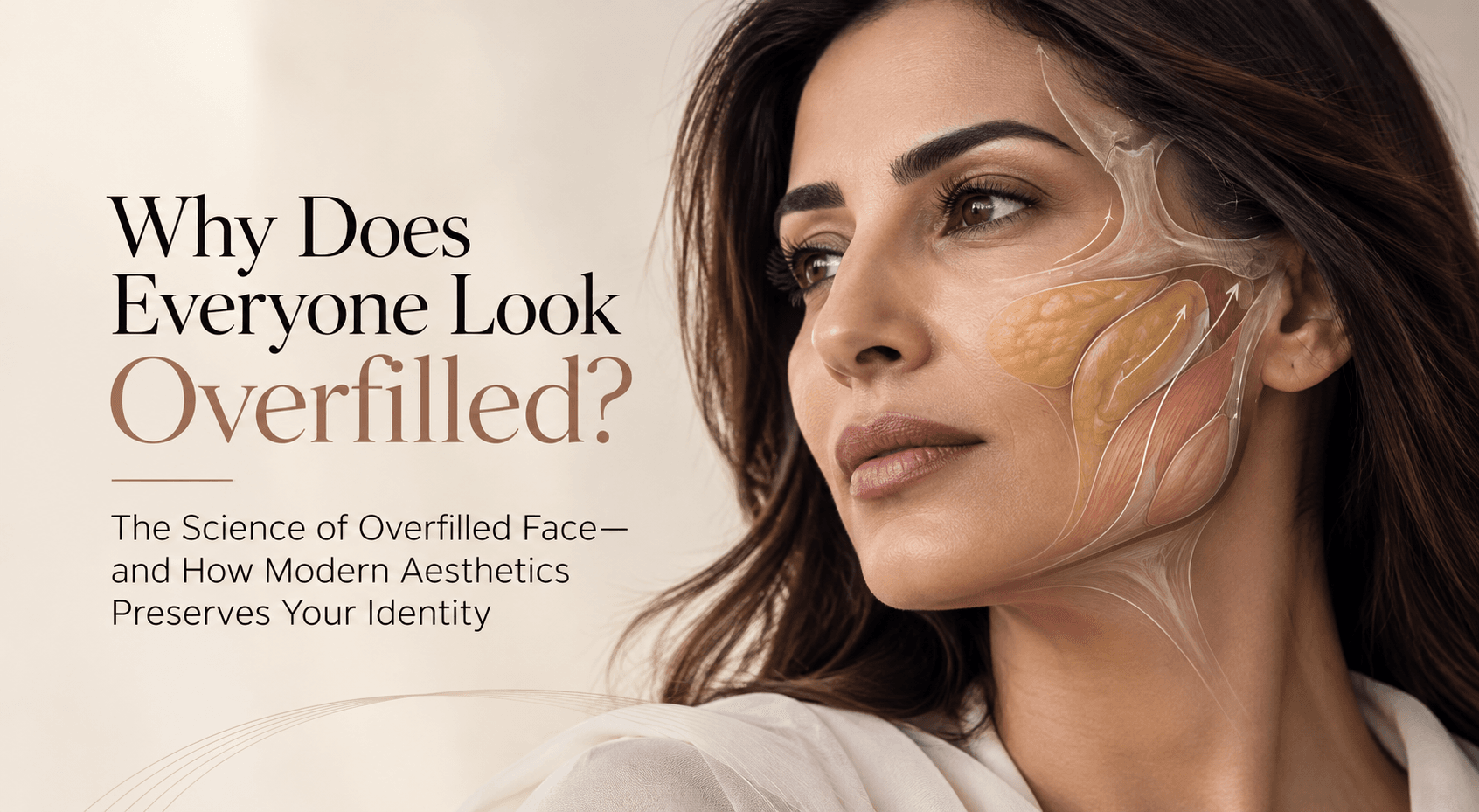
Overfilled Face Syndrome: Why It Happens, the Warning Signs, and How Natural Aesthetics Preserves Your Identity
If you are considering dermal fillers but are worried about looking puffy, unnatural, “done,” or simply not like yourself, you are not alone.
Fear of overfilling has become so widespread that it has now entered the scientific literature. In 2026, a commentary in the Journal of Cosmetic Dermatology discussed Fear of Overfilling (FOF) as a clinically relevant response to the increasing visibility of distorted aesthetic outcomes and emphasized the dermatologist’s role in preserving facial identity.
The concern is understandable. We have all seen faces where the cheeks appear unusually round, the under-eyes look swollen, the lips dominate the face, or the normal contours and expressions seem somehow altered.
But this is where an important distinction needs to be made:
An overfilled face is not simply a face that has had filler.
Modern facial aesthetics is moving away from the idea that every sign of aging should be “filled.” A natural result depends on understanding what has actually changed in the face, which anatomical layer is responsible, whether volume is truly missing, what product is appropriate, how much is necessary—and sometimes whether filler should be used at all.
In my clinical approach to facial rejuvenation in Jeddah, one principle guides treatment:
The goal is not to make a face fuller. The goal is to understand what the face has lost—and restore only what is necessary without changing the person’s identity.
What Is Overfilled Face Syndrome?
Facial Overfilled Syndrome (FOS) is a term increasingly used in the medical literature to describe facial distortion resulting from excessive, inappropriate, cumulative, or anatomically mismatched soft-tissue filler treatment.
It is not yet a diagnosis with universally agreed diagnostic criteria. However, multiple recent publications describe recognizable patterns that may include:
- Excessive fullness of the cheeks or midface
- Disproportionately projected cheekbones
- Persistent under-eye or malar swelling
- Lips that overpower the surrounding facial proportions
- An excessively projected or elongated chin
- Loss of normal facial angles and transitions
- A broad or heavy-looking lower face
- Altered facial expression
- An unnatural smile
- Facial features that look acceptable at rest but distorted during movement
- Progressive loss of the patient’s original facial characteristics
A 2024 review in Dermatologic Clinics described Facial Overfilled Syndrome as an underrecognized complication associated with inappropriate filler placement, excessive volume, incorrect product selection, and attempts to treat facial aging predominantly with filler.
A subsequent anatomical review emphasized that the problem is not simply “too many millilitres.” Overfilling can also occur when filler is placed in the wrong anatomical layer or when augmentation does not respect skeletal structure, fat compartments, retaining ligaments, muscle movement, and individual facial morphology.
That distinction is fundamental.
Why Does an Overfilled Face Happen?
There is rarely one single cause. In many patients, the overfilled appearance develops gradually as the cumulative result of several treatment decisions made over a number of years.
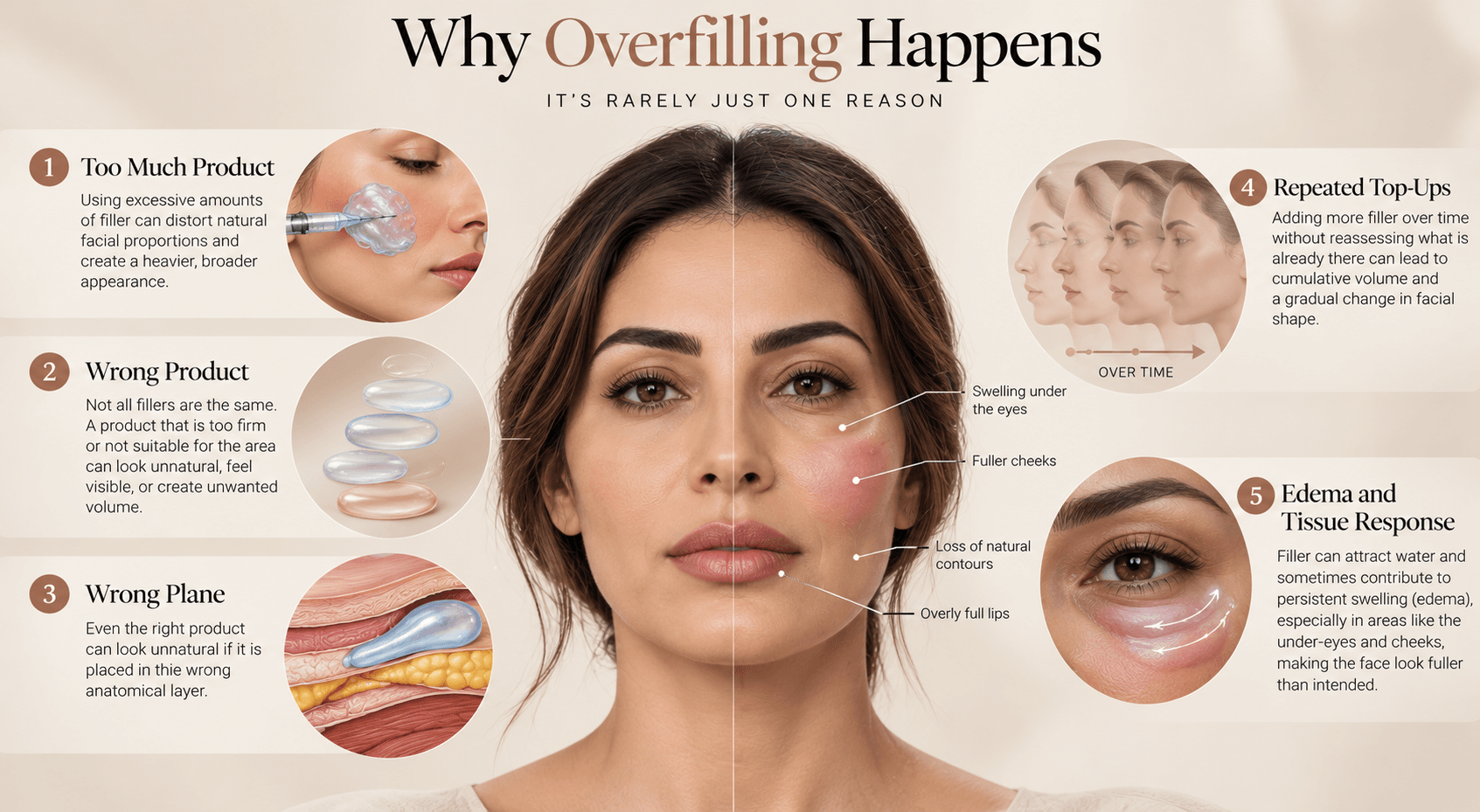
1. Too Much Filler Is the Obvious Cause—but Not the Only One
Yes, simply injecting excessive quantities of filler can distort facial proportions.
Every face has a three-dimensional relationship between bone, fat, muscle, ligaments, and skin. Adding increasing amounts of material eventually stops restoring anatomy and starts creating new anatomy.
A cheek that has genuinely lost projection may benefit from carefully placed volume.
The same cheek repeatedly augmented because the patient or practitioner believes that “more lift requires more filler” may eventually become disproportionately wide, excessively projected, or heavy.
Similarly, repeatedly filling every visible line can lead to a progressively larger face without addressing why the line exists.
This is one of the central problems with what I call line-chasing aesthetics.
A line is not automatically a volume deficiency.
For a deeper discussion of filler longevity, migration, rheology, and common misconceptions, read The Scientific Realities Behind 3 Major Hyaluronic Acid Filler Myths.
2. The Face Does Not Age Simply by “Losing Volume”
One of the biggest misconceptions in aesthetic medicine is that aging equals volume loss and therefore volume must always be replaced.
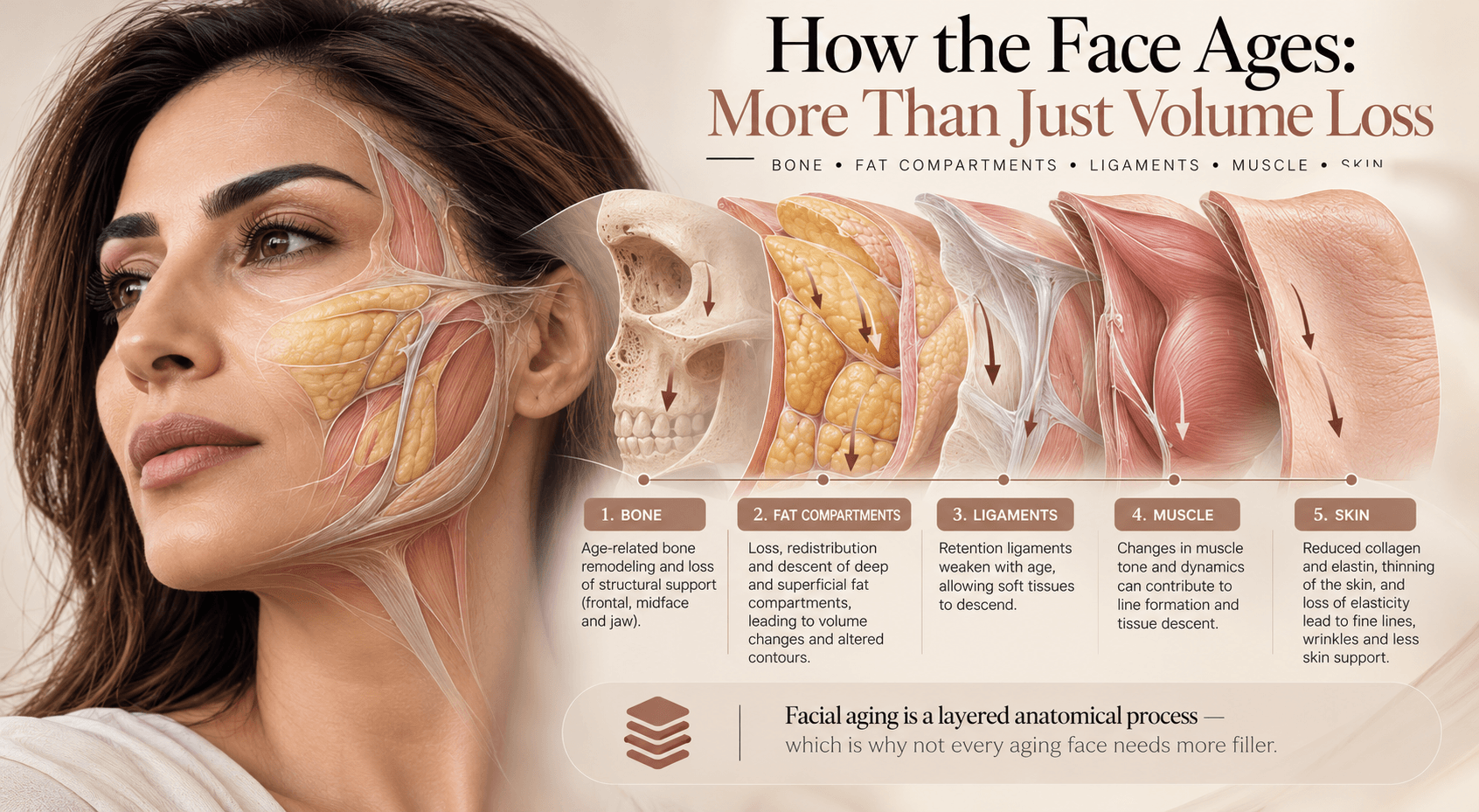
Facial aging is much more complex. With time there are changes in:
- Facial bone and skeletal support
- Deep and superficial fat compartments
- Retaining ligaments and fascial structures
- Muscle activity
- Skin thickness and elasticity
- Collagen and extracellular matrix
- Fat distribution
- Tissue descent
- Facial biomechanics
Some facial compartments lose volume. Others may descend, change position, become heavier, or become more visible because neighboring structures have changed.
Therefore:
A face that looks tired, heavy, or aged does not automatically need more volume.
Quantitative imaging studies confirm that facial aging involves differential changes across different anatomical compartments rather than uniform deflation of the entire face.
This is why treating aging as though the face were simply a balloon that needs reinflating can produce unnatural results.
Significant weight loss is one situation in which genuine facial deflation may occur, but even then the objective should be restoration rather than indiscriminate volumization. I discuss this in more detail in Ozempic Face: Restore Volume Without Overfilling.
3. Previous Filler May Still Be Present
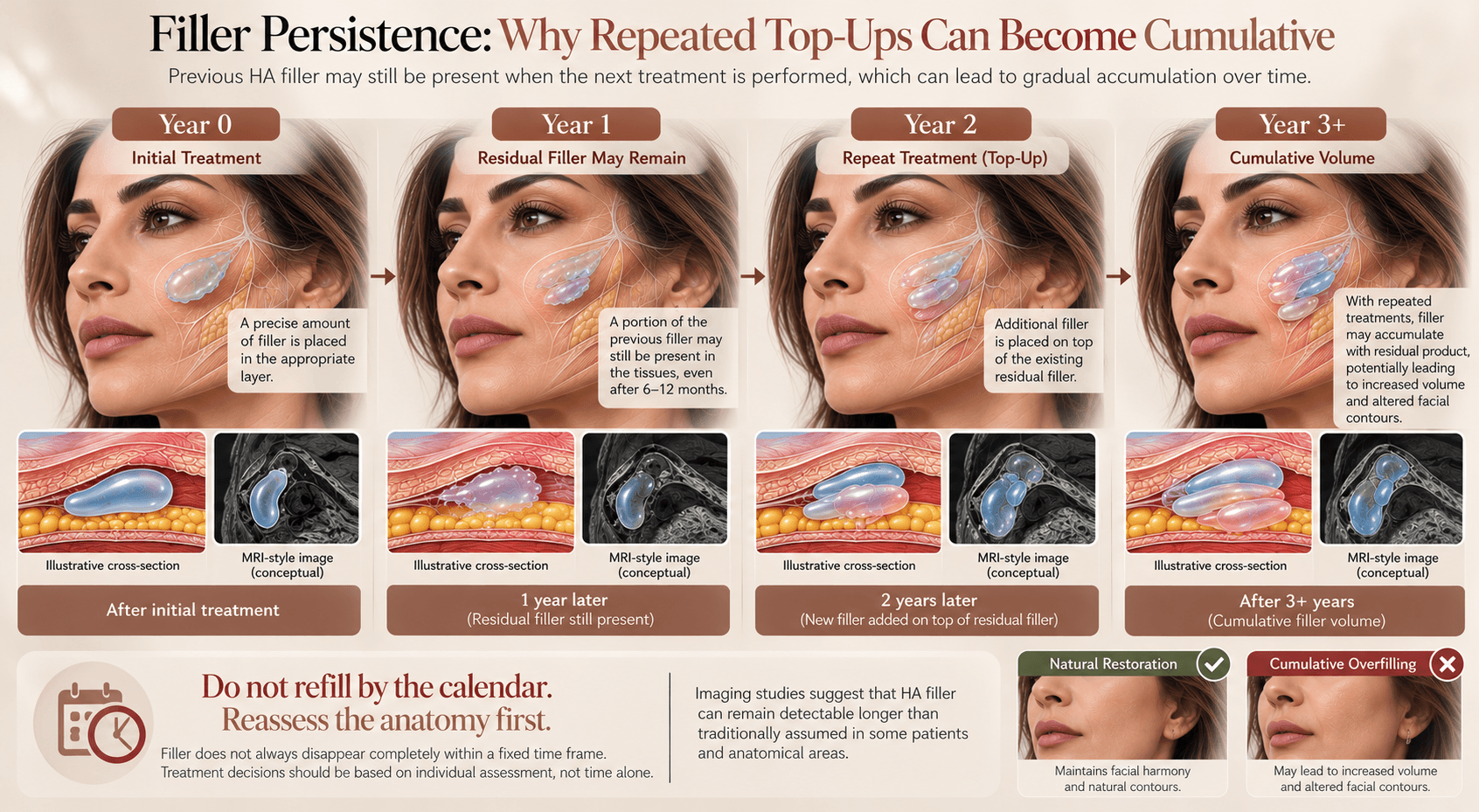 This is one of the most important developments in our understanding of modern filler treatment. Patients have traditionally been told that hyaluronic acid fillers generally disappear within a predictable number of months. The reality appears more complex.
A 2026 systematic review evaluating the durability of hyaluronic acid fillers found that persistence varies according to the product, anatomical location, manufacturing technology, tissue characteristics, and method of assessment. Objective imaging demonstrated meaningful persistence beyond one year in a number of studies.
Even more strikingly, MRI studies have demonstrated detectable hyaluronic acid material years after treatment in selected patients.
In a 2024 MRI study of 33 patients, hyaluronic acid filler was identifiable in all patients who reported no midface filler treatment for at least two years. Some reported their last treatment many years previously.
The study was small and retrospective, so it should not be interpreted as proof that every filler lasts for many years. However, it clearly challenges the assumption that previous hyaluronic acid has always disappeared before the next treatment.
A further 2026 three-dimensional MRI study reported that measured filler-associated volume in some patients exceeded the originally documented injected volume. These findings are interesting but require confirmation in larger prospective studies.
The clinical lesson is important:
Do not automatically refill an area simply because a certain number of months has passed. Reassess the anatomy first.
4. Repeated “Top-Ups” Can Become Cumulative
Imagine a patient who receives cheek filler every 9 to 12 months.
If every appointment begins with the assumption that the previous filler has disappeared, another syringe may be added.
But if part of the previous product remains, treatment becomes cumulative.
Year after year, the face may gradually move away from its baseline anatomy.
Because the change happens slowly, both the patient and practitioner can adapt visually and fail to appreciate how much the face has changed.
This phenomenon is sometimes discussed as perception drift: repeated exposure to altered facial proportions may gradually recalibrate what looks “normal.”
This is one reason historical photographs are so important.
When I assess someone who has received years of injectable treatment, I do not want to see only yesterday’s photograph.
I want to understand what their face looked like before the treatment journey began.
5. The Wrong Product Can Be Used in the Right Area
All hyaluronic acid gels are not interchangeable.
Different HA gels vary in properties including:
- Firmness
- Elasticity
- Cohesivity
- Viscosity
- Degree and type of cross-linking
- Water interaction
- Tissue integration
- Ability to withstand compression
- Behaviour during facial movement
A product suitable for deep structural support is not necessarily appropriate for thin, highly mobile, or superficial tissue.
Similarly, a very soft product that performs beautifully in one anatomical layer may provide inadequate structural support in another.
The right product is determined by anatomy and treatment objective—not by which syringe happens to be available.
This is why simply asking, “Which filler brand is best?” misses the more important question:
Which HA gel, in which plane, for which anatomical problem, in this particular face?
For patients trying to understand the difference between volume-restoring fillers, skin-quality injections, and collagen-stimulating treatments, see Skin Boosters vs Fillers vs Biostimulators: Radiesse, Sculptra, PDRN & Exosomes Explained.
6. The Correct Product in the Wrong Plane Can Still Look Wrong
The face consists of multiple anatomical layers.
Depending on the region, filler may be placed near bone, within particular fat compartments, beneath muscle, within subcutaneous tissue, or in other precisely selected planes.
The same volume can behave very differently depending on where it is placed.
For example, excessive superficial material may become visible or palpable, distort contours, or interfere with normal tissue movement.
Overfilling research increasingly emphasizes anatomical mismatch rather than volume alone as an important mechanism of Facial Overfilled Syndrome.
This is why a modern injector must understand not only where on the face to inject, but where within the three-dimensional anatomy of that area the product should sit.
7. The Under-Eye Is Particularly Vulnerable to Puffiness
One of the most frequent areas patients associate with the “overfilled look” is the lower eyelid and upper cheek.
This region deserves particular caution.
The tissues around the eye contain complex lymphatic drainage pathways, retaining ligaments, and thin soft tissue. In susceptible patients, HA filler may contribute to persistent malar or periorbital edema.
A 2026 expert review addressing malar edema identified risk factors including pre-existing patient characteristics, previous periorbital surgery, high filler volumes, and inappropriate placement.
Therefore, an under-eye hollow does not automatically mean that tear-trough filler is the correct treatment.
Sometimes the problem is:
- Volume deficiency
- Skeletal anatomy
- Midface support
- Pigmentation
- Thin skin
- Prominent vasculature
- Fat prolapse
- Skin laxity
- Edema
- Or a combination of several factors
Putting filler into the wrong type of under-eye problem may make the patient look more tired rather than less tired.
8. Filler Can Move—or Appear to Move
“Filler migration” is frequently discussed online, sometimes too casually.
True post-treatment displacement has been demonstrated, but not every area of fullness away from an injection site represents migration.
Apparent movement can result from several mechanisms including:
- Tissue-plane spread
- Pressure
- Product characteristics
- Edema
- Repeated layering
- Changes in surrounding anatomy
A 2024 ultrasound investigation of 382 zygomatic regions provided objective evidence that displacement can occur after soft-tissue filler treatment.
High-resolution ultrasound is increasingly valuable when the clinical picture is unclear because it can help identify previous filler deposits, anatomical planes, and some complications.
So when a patient presents with unexplained fullness after years of injections, the solution should not always be another syringe.
Sometimes the first step is diagnosis.
9. Filler Can Affect Facial Movement
A natural face is not a photograph.
It smiles, squints, laughs, speaks, compresses, and changes shape continuously.
This is why aesthetic assessment must include dynamic facial examination, not simply a front-facing photograph at rest.
An important 2023 study evaluated patients with Facial Overfilled Syndrome using ultrasound and objective assessment of facial expression. Excess filler was associated not only with midface fullness but also with altered smiling. Targeted hyaluronidase treatment improved measured oral commissure movement in that clinical series.
This changes the conversation.
A technically smooth cheek is not necessarily a successful cheek if the patient no longer smiles naturally.
Facial identity exists in movement as much as it exists in structure.
The same expression-preserving philosophy applies to neuromodulator treatment. You can read more in The Art of Natural Botox Results: Precision Micro-Dosing, Facial Anatomy & Longevity.
Is Hyaluronic Acid Filler Bad?
No. That conclusion would be scientifically inaccurate.
HA fillers remain valuable medical tools and have a well-established role in appropriately selected patients.
The problem is not the existence of filler. The problem is filler being asked to solve every aesthetic problem.
Used intelligently, HA gels can restore proportion, improve structural deficiencies, soften selected age-related changes, and produce extremely natural results.
Used repeatedly without diagnosis, however, they can progressively alter the face.
The correct question is therefore not:
“Should I avoid fillers?”
It is:
“Does this particular problem actually require filler?”
What Does Natural-Looking Filler Actually Mean?
Natural aesthetics is sometimes misunderstood as simply using a tiny amount of product. But using less of the wrong product in the wrong place is not automatically natural.
A natural outcome requires alignment between:
Diagnosis → anatomy → product → plane → amount → facial movement → long-term treatment plan
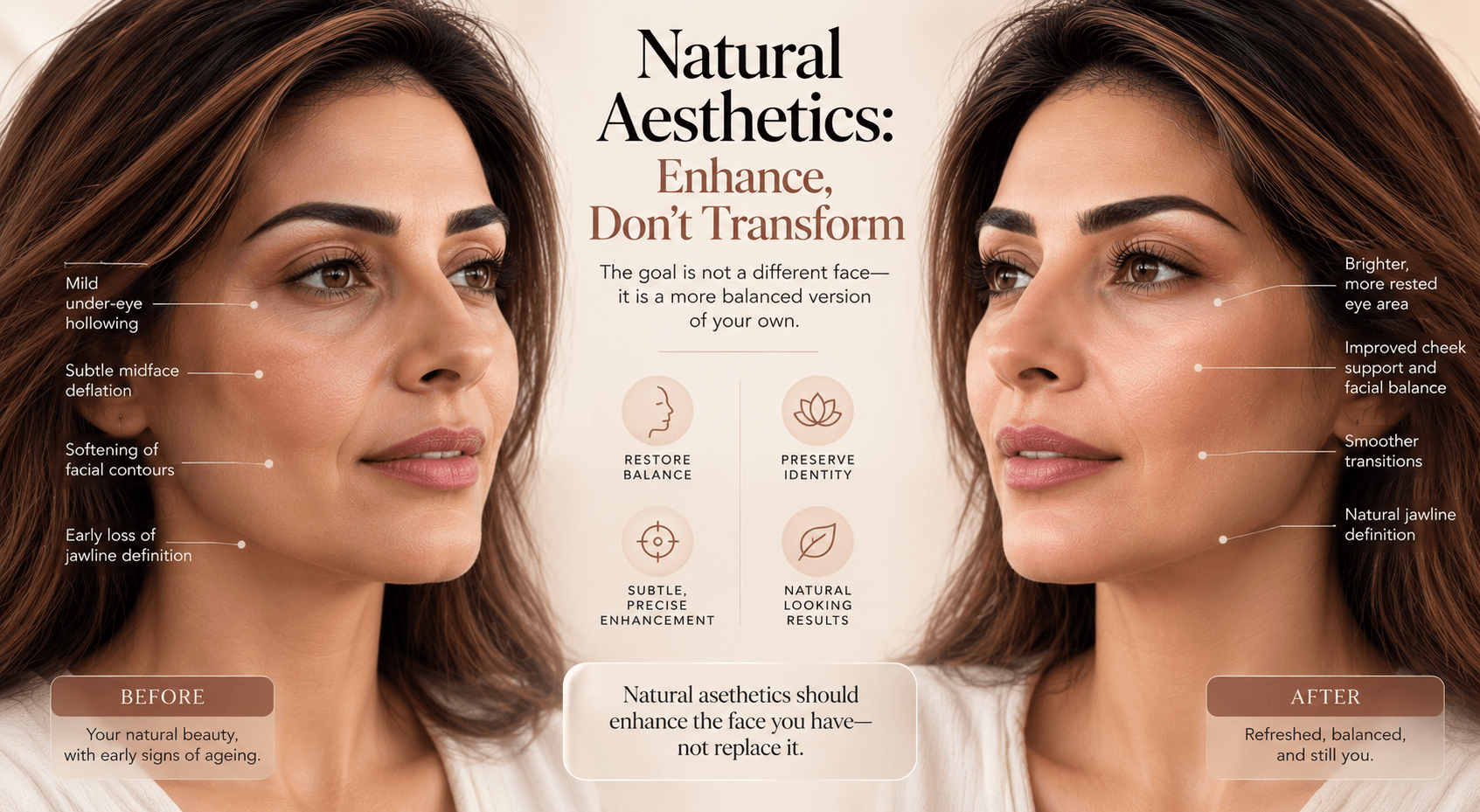
The objective is not mathematical symmetry. It is not the creation of a standardized “ideal face.”
It is preservation of the relationships that make a particular person recognizable.
Your Facial Identity Matters More Than an Aesthetic Template
One of the concerns in modern aesthetic medicine is the increasing standardization of faces.
Certain features become fashionable:
- High cheekbones
- A sharply contoured jaw
- An elongated chin
- Very full lips
- A particular eyebrow shape
But a face is not a collection of fashionable individual parts.
A beautiful lip on one patient can be completely disproportionate on another.
The same cheek projection may feminize one face and distort another.
A 2025 eye-tracking and perception study found that exaggerated alterations to particular facial regions could reduce perceived attractiveness and alter perceptions of masculine and feminine facial characteristics.
The important principle is simple:
More correction does not necessarily produce greater attractiveness.
The best aesthetic treatment should therefore not make everyone converge towards the same face.
It should allow the patient to look healthier, fresher, or better rested while remaining unmistakably themselves.
The Role of Ethnicity and Facial Anatomy
There is another reason standardized filler maps can be problematic.
Facial skeletal structure, soft-tissue distribution, and proportions vary significantly between individuals and populations.
Saudi Arabia itself is extremely diverse.
Patients presenting to aesthetic clinics in Jeddah may have very different combinations of:
- Facial width
- Maxillary projection
- Orbital anatomy
- Mandibular shape
- Skin thickness
- Soft-tissue distribution
It is therefore inappropriate to treat every face using the same predetermined number of syringes or the same injection map.
Modern facial aesthetics should be phenotype-aware rather than template-driven.
The objective is not to make a Saudi, Arab, Asian, European, or African face conform to a single globalized social-media ideal.
It is to preserve the architecture and identity of the individual patient.
What I Look for Before Considering Filler
Before deciding where to inject, the more important decision is whether to inject.
A proper assessment should consider:
Facial Structure
What is the underlying skeletal architecture?
Existing Volume
Is there genuine volume deficiency—or simply descent, laxity, or shadow?
Previous Filler
What has previously been injected, where, how much, and when?
Facial Movement
Does the proposed correction still look appropriate when the patient smiles and speaks?
Skin Quality
Would the patient benefit more from improving skin quality, pigmentation, collagen, or laxity rather than adding volume?
Edema
Is the apparent hollow actually adjacent to swelling?
Proportion
Will improving one feature disturb another?
Long-Term Trajectory
What will happen if this treatment is repeated for the next five or ten years?
This last question is particularly important.
Aesthetic medicine should not be designed around one photograph taken two weeks after treatment.
We should be planning how the face will age.
Sometimes the Best Filler Treatment Is No Filler
This is a sentence patients deserve to hear more often.
Not every consultation needs to end with an injection.
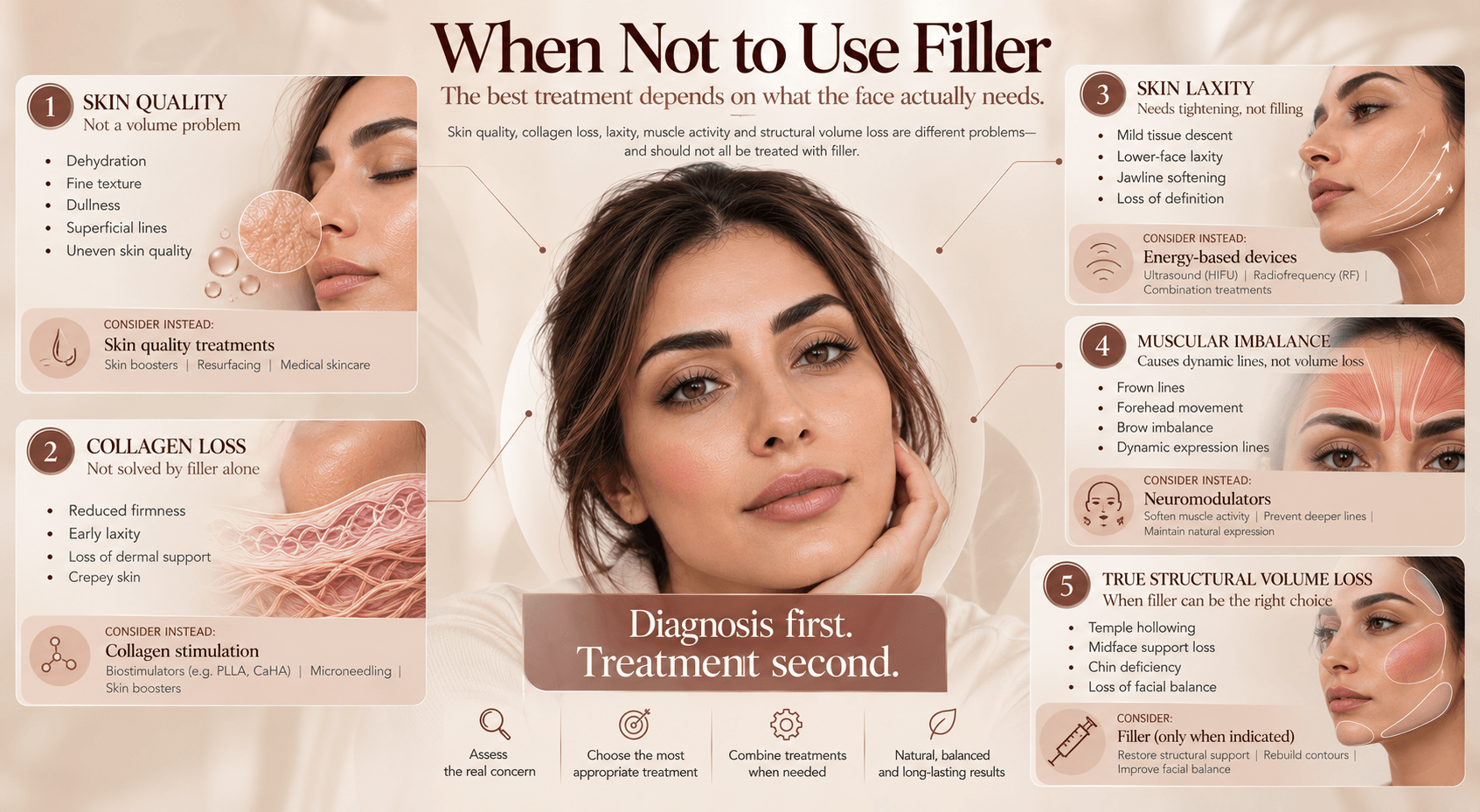
Depending on the diagnosis, alternatives may include treatment directed toward:
- Skin quality
- Collagen stimulation
- Pigmentation
- Vascular changes
- Muscular imbalance
- Skin laxity
- Resurfacing
- Ultrasound or radiofrequency-based tightening
- Regenerative approaches
- Surgery when anatomical changes exceed what nonsurgical procedures can reasonably correct
- Or simply doing nothing
If the main concern is dehydration, fine texture, or skin quality rather than structural volume loss, a skin-quality treatment may sometimes be more appropriate than conventional filler. Read Hyaluronic Acid Skin Boosters in Jeddah: Which One Is Right for You?.
Where the dominant problem is skin laxity rather than volume deficiency, appropriately selected advanced energy-based devices for skin tightening and collagen remodeling may be more appropriate than simply adding filler.
Pigmentation, photodamage, acne, textural change, and other dermatological conditions require a different diagnostic approach from facial volumization. Learn more about medical and cosmetic dermatology treatments in Jeddah.
There are also patients whose facial proportions are already excellent but who request correction because repeated exposure to filtered or highly modified images has changed their perception of what is normal.
In such situations, restraint is not undertreatment.
Restraint is part of good medical practice.
What If You Already Look Overfilled?
Do not assume that the answer is to dissolve everything immediately.
The first step should be a careful medical assessment.
The clinician needs to establish:
- What material was injected?
- Where is it located?
- Is the problem genuinely excess filler?
- Is swelling or inflammation present?
- Is the filler HA and therefore potentially responsive to hyaluronidase?
- Would partial correction be preferable to complete dissolution?
Where examination alone is insufficient, high-frequency ultrasound can sometimes help localize filler deposits and guide treatment.
Can Overfilled HA Filler Be Dissolved?
Hyaluronidase can break down hyaluronic acid filler and is an important treatment in selected patients.
But “dissolving” should itself be treated as a medical procedure—not a casual reset button.
Targeted treatment may be preferable to indiscriminate dissolution, particularly when the objective is to remove problematic deposits while preserving desirable correction.
Management becomes more complex when non-HA fillers, permanent materials, inflammatory reactions, or significant tissue changes are involved.
Puffiness After Filler Is Not Always Overfilling
This is another important distinction.
A swollen face may have:
- Normal short-term post-injection edema
- Persistent malar edema
- Delayed inflammatory reaction
- Infection
- Filler-associated nodules
- Product displacement
- Hypersensitivity-related inflammation
- Genuine excessive volume
These conditions require different treatment.
Delayed inflammatory reactions to HA fillers are uncommon but can occur weeks, months, or occasionally much later after treatment.
Presentations may include:
- Swelling
- Nodules
- Redness
- Tenderness
- Induration
Therefore, prolonged or new swelling after previous filler should be medically evaluated rather than assumed to be a cosmetic inconvenience.
Why Patients in Jeddah Should Keep a “Filler Passport”
This is particularly relevant in a highly mobile aesthetic market such as Jeddah and the wider GCC.
Patients may receive treatment in Jeddah, Riyadh, Dubai, London, or elsewhere—and may see several different injectors over the years.
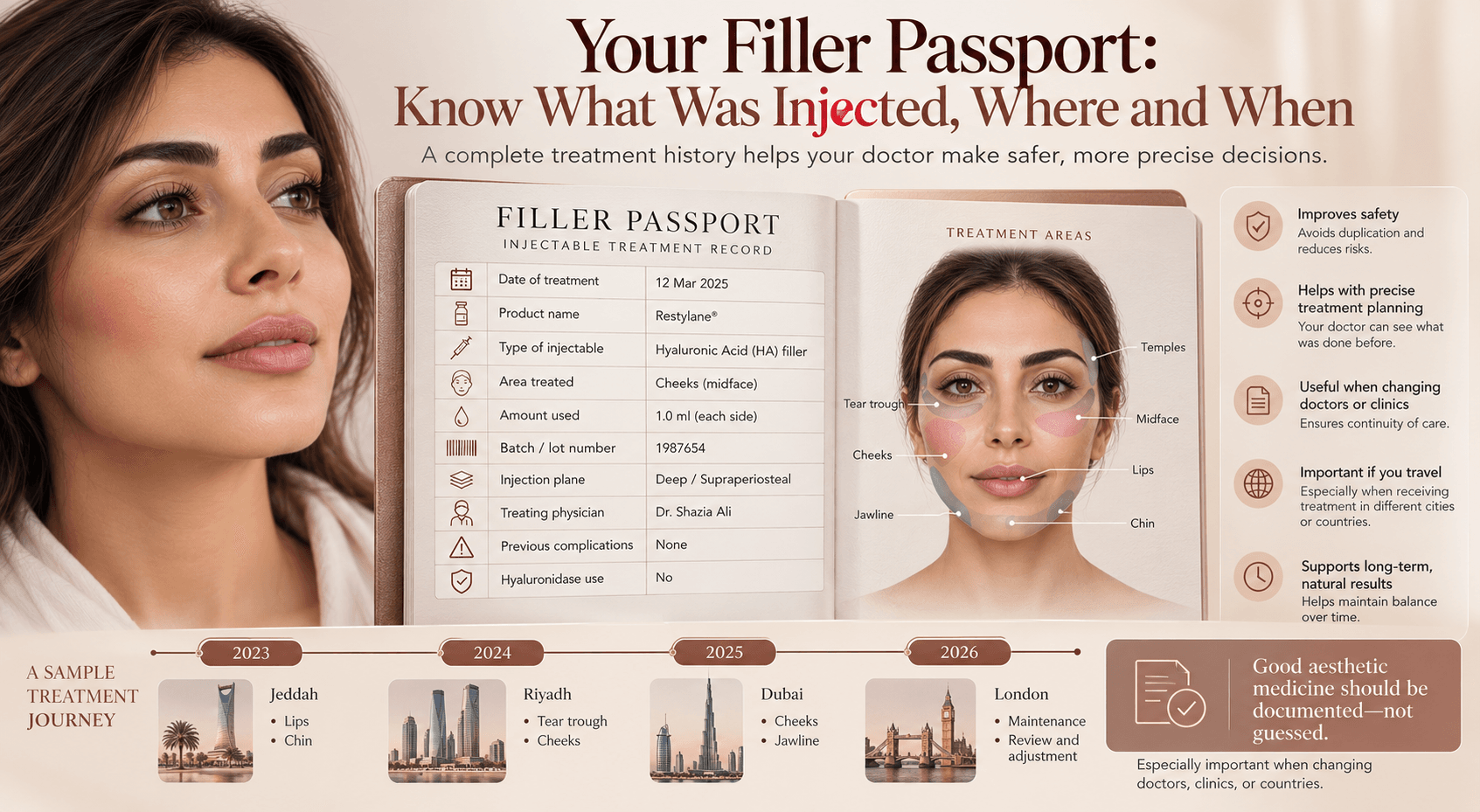
Without documentation, the next physician may have no reliable record of:
- The product used
- Injection date
- Number of syringes
- Anatomical areas treated
- Batch or lot details
- Treatment plane
- Previous complications
- Whether hyaluronidase has previously been used
I strongly recommend maintaining a longitudinal injectable record or “filler passport.”
This can be as simple as a secure digital record containing treatment dates, products, areas, and quantities.
It becomes increasingly valuable as evidence emerges that some HA fillers may remain detectable substantially longer than previously assumed.
What Should You Ask Before Having Filler in Saudi Arabia?
In Saudi Arabia, aesthetic injectable treatment should be approached as a medical procedure.
The Saudi Food and Drug Authority advises healthcare providers to use SFDA-approved injectable fillers, use products according to the manufacturer’s indications, ensure providers are appropriately specialized and trained, explain potential complications, and report relevant device-related incidents through the appropriate channels.
Before proceeding, reasonable questions include:
- What exactly are we trying to correct?
- Could something other than filler treat this better?
- Which product are you using?
- Why is this particular HA gel appropriate for this area?
- How much are you proposing?
- What anatomical plane will be treated?
- Do I still have previous filler?
- What are the alternatives?
- What are the important complications?
- What will we do if I develop persistent swelling or another problem?
- Will my product and treatment details be documented?
A good consultation should be able to answer those questions without rushing the patient toward treatment.
Is One Syringe “A Lot” of Filler?
Not necessarily.
Millilitres alone are a poor measure of whether treatment is excessive.
One millilitre distributed appropriately across a large structural area may be conservative.
A much smaller quantity placed superficially in a delicate anatomical region may be excessive.
The relevant variables are:
Volume + anatomy + product + plane + indication + previous treatment + time
This is why competing on the basis of “number of syringes” is fundamentally the wrong way to think about facial medicine.
Is “Full-Face Filler” Always Bad?
No.
Full-face assessment is actually valuable.
But full-face assessment does not mean full-face injection.
A sophisticated full-face consultation identifies how different regions interact.
Sometimes correcting one strategic structural deficiency improves the apparent problem elsewhere and reduces the need for additional treatment.
The objective should be maximum aesthetic impact with the minimum intervention required, not injecting every region that can technically accept filler.
How Can Modern Aesthetics Prevent the Overfilled Look?
Identity-preserving aesthetic treatment rests on several principles.
Diagnose Before Injecting
Treat the cause of the aesthetic concern, not simply the visible line.
Respect Anatomy
Understand bone, ligaments, fat compartments, muscle, and vascular anatomy.
Respect Facial Movement
A result must work when the patient smiles—not merely in a static photograph.
Choose the Right HA Gel
Product behaviour should match the tissue and therapeutic objective.
Choose the Right Plane
Even excellent products can produce poor results when placed inappropriately.
Use the Minimum Effective Amount
Treatment should stop when the anatomical objective has been achieved.
Reassess Before Repeating Treatment
Do not assume previous filler has disappeared simply because a conventional treatment interval has elapsed.
Treat the Face, Not the Trend
Aesthetic ideals change. Your identity should not have to.
Know When Not to Inject
Good aesthetic medicine includes the ability to say:
“You do not need filler here.”
The Future of Facial Aesthetics Is Less About Filling—and More About Diagnosis
The evolution of aesthetic medicine is moving away from indiscriminate volumization.
We now understand far more about:
- Facial compartment anatomy
- Facial biomechanics
- Long-term filler persistence
- Dynamic expression
- Ultrasound imaging
- Delayed complications
- Product rheology
- Individual variation
The science is becoming more sophisticated.
Our aesthetic goals should become more sophisticated with it.
Modern treatment should not ask:
“Where can we add filler?”
It should ask:
“What has changed anatomically—and what is the least invasive, most precise way to restore balance?”
The same diagnostic principle applies elsewhere in aesthetic dermatology. For example, acne scars may require subcision, resurfacing, RF microneedling, or only selected use of filler depending on the scar type. Read more in Acne Scar Treatment in Jeddah: Subcision, Fractional CO2, RF Microneedling & Dermal Fillers.
Frequently Asked Questions About Overfilled Face
Why Do Some People Look Puffy After Fillers?
Puffiness can result from excessive volume, filler placement, product characteristics, water interaction, lymphatic disturbance, edema, repeated injections, or a combination of these factors.
Persistent puffiness—particularly around the eyes—should be medically assessed rather than automatically treated with additional filler.
Does Filler Always Migrate?
No.
Filler displacement can occur and has been demonstrated using ultrasound, but not every fullness seen away from an injection site represents true migration.
Edema, tissue-plane spread, residual product, and changing facial anatomy can produce a similar appearance.
Can Filler Last Longer Than One or Two Years?
Yes, in some patients and anatomical regions.
Recent systematic-review and imaging evidence shows that HA filler can remain detectable beyond traditional expectations.
However, longevity varies substantially between products, locations, and individuals, and very long persistence reported in small MRI studies should not be generalized to every patient.
Can Overfilled Filler Be Dissolved?
HA fillers can usually be degraded with hyaluronidase.
Whether complete or targeted dissolution is appropriate depends on the clinical situation.
Non-HA fillers require different management.
Does Dissolving Filler Return the Face Exactly to Baseline?
Not necessarily.
Results depend on how much material is present, where it is located, how long treatment has been performed, natural aging during that period, and the condition of the surrounding tissues.
How Do I Avoid Looking Overfilled?
Choose treatment based on anatomical diagnosis rather than trends or predetermined syringe numbers.
Maintain records of previous fillers, allow proper reassessment between treatments, and be cautious about repeatedly adding volume to the same region.
What Is the Most Natural Filler?
There is no single universally “most natural” filler.
Natural results depend on choosing an HA gel whose physical properties are appropriate for the tissue, anatomical plane, and intended correction.
Can You Rejuvenate a Face Without Filler?
Absolutely.
Depending on the diagnosis, skin treatments, resurfacing, energy-based technologies, collagen-directed treatments, neuromodulators, surgery—or no treatment at all—may be more appropriate.
A Final Thought: You Should Still Look Like You
The most successful aesthetic treatment is often difficult for other people to identify.
They may think you look rested.
Healthier.
Fresher.
Perhaps younger.
But they should not immediately see the procedure.
For me, this is the distinction between facial rejuvenation and facial alteration.
We should not be measuring success by how much product we have injected or how dramatically we can transform a feature.
We should be asking:
Did we understand the anatomy?
Did we improve what genuinely needed improving?
Did we preserve movement and expression?
And most importantly:
Does this person still look like themselves?
That is the direction modern aesthetic medicine should be moving towards.
The goal isn’t to make a face fuller. It’s to understand what the face has lost—and to restore only what is necessary while preserving the identity that makes the face uniquely yours.
Related Reading
For deeper information on fillers, facial aging, skin quality, and identity-preserving aesthetic treatment:
- The Scientific Realities Behind 3 Major Hyaluronic Acid Filler Myths
- Ozempic Face: Restore Volume Without Overfilling
- Skin Boosters vs Fillers vs Biostimulators: Radiesse, Sculptra, PDRN & Exosomes Explained
- The Art of Natural Botox Results: Precision Micro-Dosing, Facial Anatomy & Longevity
- Hyaluronic Acid Skin Boosters in Jeddah: Which One Is Right for You?
- Advanced Energy-Based Devices for Skin Tightening and Collagen Remodeling
- Medical & Cosmetic Dermatology in Jeddah
- Acne Scar Treatment in Jeddah: Subcision, Fractional CO2, RF Microneedling & Dermal Fillers
Clinical References
-
Oliveira RRC. The Fear of Overfilling (FOF): A Clinically Significant Response to Digital Aesthetics and the Dermatologist's Imperative to Preserve Facial Identity. J Cosmet Dermatol. 2026;25(1):e70652. doi:10.1111/jocd.70652. PubMed: https://pubmed.ncbi.nlm.nih.gov/41521879/
-
Zhou C, Che Q, Zhao R, Wang H, Wa Q. Facial Overfilled Syndrome: A Narrative Clinical Review. Clin Cosmet Investig Dermatol. 2026;19:600459. doi:10.2147/CCID.S600459. PubMed: https://pubmed.ncbi.nlm.nih.gov/41948082/
-
Lim T. Facial Overfilled Syndrome. Dermatol Clin. 2024;42(1):121-128. doi:10.1016/j.det.2023.06.007. PubMed: https://pubmed.ncbi.nlm.nih.gov/37977678/
-
Lim TS, Wanitphakdeedecha R, Yi KH. Exploring Facial Overfilled Syndrome From the Perspective of Anatomy and the Mismatched Delivery of Fillers. J Cosmet Dermatol. 2024;23(6):1964-1968. doi:10.1111/jocd.16244. PubMed: https://pubmed.ncbi.nlm.nih.gov/38369859/
-
Schelke L, Harris S, Cartier H, Alfertshofer M, Doestzada M, Cotofana S, Velthuis PJ. Treating Facial Overfilled Syndrome With Impaired Facial Expression—Presenting Clinical Experience With Ultrasound Imaging. J Cosmet Dermatol. 2023;22(12):3252-3260. doi:10.1111/jocd.16013. PubMed: https://pubmed.ncbi.nlm.nih.gov/37772766/
-
de Castro Costa M, Andrade CA, Dantas RVF, Germani M, Buzalaf MAR, Soares DG. Clinical Durability of Hyaluronic Acid-Based Dermal Fillers for Facial Application: A Systematic Review. Aesthetic Plast Surg. 2026;50(5):1971-1993. doi:10.1007/s00266-025-05435-1. PubMed: https://pubmed.ncbi.nlm.nih.gov/41261256/
-
Issa A, Ben Ishai M, Wilde CL, et al. Longevity and Volume Expansion of Hyaluronic Acid Dermal Fillers: A Cross-Sectional 3-Dimensional Magnetic Resonance Imaging Study. Plast Reconstr Surg Glob Open. 2026;14(7):e7894. doi:10.1097/GOX.0000000000007894. PubMed: https://pubmed.ncbi.nlm.nih.gov/42396227/
-
Master M. Hyaluronic Acid Filler Longevity in the Mid-Face: A Review of 33 Magnetic Resonance Imaging Studies. Plast Reconstr Surg Glob Open. 2024;12(7):e5934. doi:10.1097/GOX.0000000000005934. PubMed: https://pubmed.ncbi.nlm.nih.gov/39015357/
-
Schelke L, Lowrey N, Mojallal A, et al. Post-Treatment Displacement of Facial Soft Tissue Fillers—A Retrospective Ultrasound-Based Investigation of 382 Zygomatic Regions. Dermatol Surg. 2024;50(10):946-952. doi:10.1097/DSS.0000000000004257. PubMed: https://pubmed.ncbi.nlm.nih.gov/38833408/
-
Almushayt SJ. The Role of Ultrasound in Facial Hyaluronic Acid Dermal Filler Injections—A Review Article. Clin Imaging. 2025;119:110413. doi:10.1016/j.clinimag.2025.110413. PubMed: https://pubmed.ncbi.nlm.nih.gov/39884168/
-
Baranska-Rybak W, Lajo-Plaza JV, Walker L, Alizadeh N. Malar Edema After Hyaluronic Acid Dermal Fillers: Expert Recommendations on Etiology, Prevention, and Management. Dermatol Ther (Heidelb). 2026. doi:10.1007/s13555-026-01920-w. PubMed: https://pubmed.ncbi.nlm.nih.gov/42844557/
-
Baranska-Rybak W, Lajo-Plaza JV, Walker L, Alizadeh N. Late-Onset Reactions After Hyaluronic Acid Dermal Fillers: A Consensus Recommendation on Etiology, Prevention and Management. Dermatol Ther (Heidelb). 2024;14(7):1767-1785. doi:10.1007/s13555-024-01202-3. PubMed: https://pubmed.ncbi.nlm.nih.gov/38907876/
-
Kempa J, Kasielska-Trojan A, Antoszewski B, et al. Measuring the Effects of Facial Regional Changes Following Excessive Aesthetic Treatments—A Survey and Eye-Tracking-Based Investigation. J Plast Reconstr Aesthet Surg. 2025;105:270-280. doi:10.1016/j.bjps.2025.04.027. PubMed: https://pubmed.ncbi.nlm.nih.gov/40318363/
-
Gupta R, Tao J, Hashemi DA, Geronemus RG. The Ethics of Cosmetic Overtreatment. JAAD Int. 2024;16:1-2. doi:10.1016/j.jdin.2024.03.016. PubMed: https://pubmed.ncbi.nlm.nih.gov/38745897/
-
Saudi Food and Drug Authority. Post-Market Evaluation for the Safety of the Current Local Practices of Injectable Dermal Filler. SFDA. Available at: https://beta.sfda.gov.sa/en/node/87452
This article is intended for patient education and does not replace an individual medical assessment. Injectable treatments should be performed by appropriately qualified medical professionals using products approved for use in the relevant country.